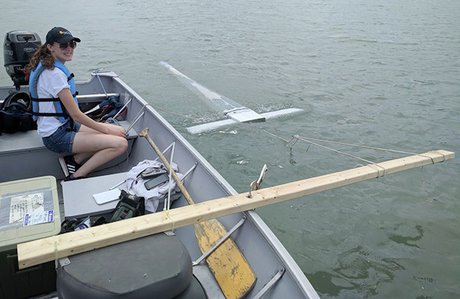
My research investigates the concentration of microplastics in freshwater systems, wastewater treatment, and agricultural soils in the Niagara Region (Ontario, Canada).
What inspired you to get into this work?
I love to problem solve, and I wanted to investigate an environmental problem close to home. Microplastic pollution is widespread in all urban environments, and it has been incredibly rewarding working within my community to better understand this problem.
What body of knowledge would you like to build on?
Following my research on microplastics, I would love to continue investigating other emerging environmental contaminants in the Great Lakes basin. I find tracing environmental contaminants in freshwater environments to be fascinating and would enjoy playing a role in understanding their environmental impact, tracing them back to their source, and investigating novel ways to mitigate against these contaminants. I think this would be a great fit for my research goals and personal growth.
If you could change one thing about the way science is done, what would it be?
Collaboration should be fostered and emphasized to a greater extent. In emerging fields such as microplastic studies, standardized methods haven’t been agreed upon yet. One of the biggest struggles of my study was determining the best method for isolating microplastics from water/soil, as well as visually identifying what is actually a “microplastic.” More collaboration from the beginning of my research process would have helped me tackle these challenges more effectively.
How long have you been an IAGLR member and why did you join?
I have been an IAGLR member since March 2019.
Where will we find you at the conference?
You can find me at the session Microplastics in the Environment: Source, Fate, Impact, Detection, and Mitigation where I will be presenting my work titled “The occurrence of microplastics and microfibres in municipal water systems of the Niagara Region, ON” on Wednesday morning in Seymour Union, Room 220!