The art of communication is an essential tool for making science effective. Without it, there are just reams of data, handfuls of statistics, and hours upon hours of sweat equity from grabbing field samples, doing stuffy lab work, and generating thought-provoking analysis with nowhere to go.
Don’t be that person who doesn’t take the art of communication seriously. Think of how much further along we might be on the climate change issue, for example, if the science behind it had been communicated more effectively early on.
Consider scientists such as Neil deGrasse Tyson and the late E.O. Wilson, two guys with writing chops powerful enough to fascinate people about anything from astrophysics to Alabama ants. Their ability to engage us illustrates one of the fundamental things you should always consider when communicating about your work: What makes your subject matter fascinating? Why do you do the kind of research you do? And why should the public care?
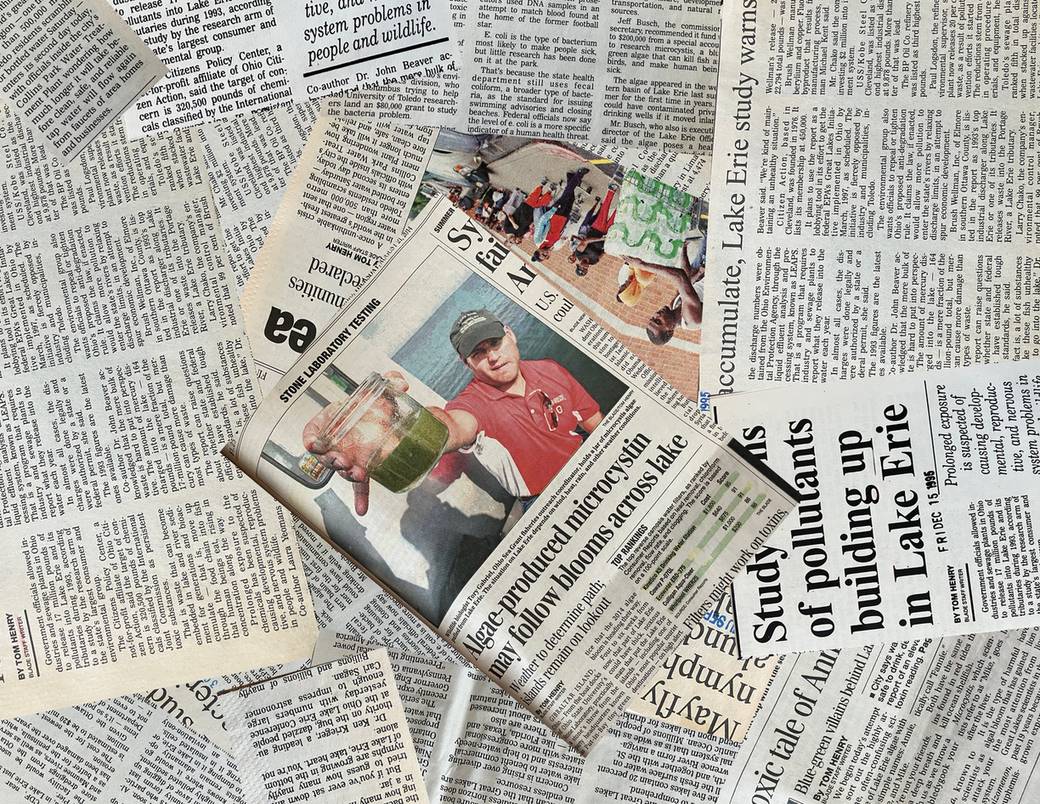
As the longest-serving Great Lakes writer still gainfully employed by a form of media once rooted in dead trees, aka the newspaper industry, I’m fortunate enough to have received IAGLR’s Jack Vallentyne Award for 20 or more years of sustained, high-impact Great Lakes science communications. In fact, I was the first newspaper writer to receive it.
I don’t pretend to have all of the answers. But I like telling people it’s my job to decipher scientific gobbledygook and explain it in a way that resonates with the layman.
I also recognize the enormous responsibility that environmental writers have. We have the power to needlessly inflame our readers or, equally as bad, put them to sleep about an issue they need to know about.
That’s where trust comes in, not just between me and my readers but also between me and the researchers I depend upon for communicating Great Lakes science. You need to know whom to trust.
Environmental writing fascinates me because, as a journalist, you have to be more street-savvy than your colleagues who simply report on, say, the outcome of city council votes or lawsuit rulings. Everything in life isn’t a convenient thumbs up or thumbs down. There are a lot of messy grey areas in science, with theories tested over and over.
So you try figuring out who’s telling the truth and who’s pushing an agenda, which requires trust of unbiased sources like scientists. Sure, science can be politicized. But I count on scientists for objective information. When people get into arguments about whether or not they “believe” in climate change, I respond with something like this: “The funny thing about science is it doesn't give a crap what you, me, or the corner lamppost want to believe. Science is what science is. It’s gonna happen, regardless what humans believe, and the best thing we can do as a human race is figure it out.”
Below are some additional things to keep in mind when approaching journalists such as me. Arm yourself with facts and data, for sure. But use them to help tell your story instead of being it.
Some other advice
Be a storyteller. There’s an old axiom in journalism: Write your stories like you’re telling them to your mother. Downplay the mundane. Be loose and conversational.
Think big picture. The average reader is less likely to be as immersed in the process of how scientists reach their conclusions as they are the conclusions themselves, though both are important.
Think human impact. People want to read about people, about how lives could be upended or improved by research. Don’t assume they can make the connections between ecosystem health and personal health. Many people can’t—or won’t. Spell it out for them, even if it’s painfully obvious to you.
Money talks. It hurts the altruistic side of me to admit that. More and more, especially now as social media distorts the message, people demand programs that make wise and efficient uses of money. Justification for research spending is about as predictable as the contrarian wisecracks on Facebook and X that blur reality.