Take a moment to ponder the photo above. Go ahead, we’ll wait. As you contemplate those many mouths, what thoughts run through your head? Do you recoil in fear at the monstrous maws? Are you fascinated by all of those teeth? Do you hunger to learn more about these curious creatures? Or have you seen enough to suit your tastes, thank you very much?
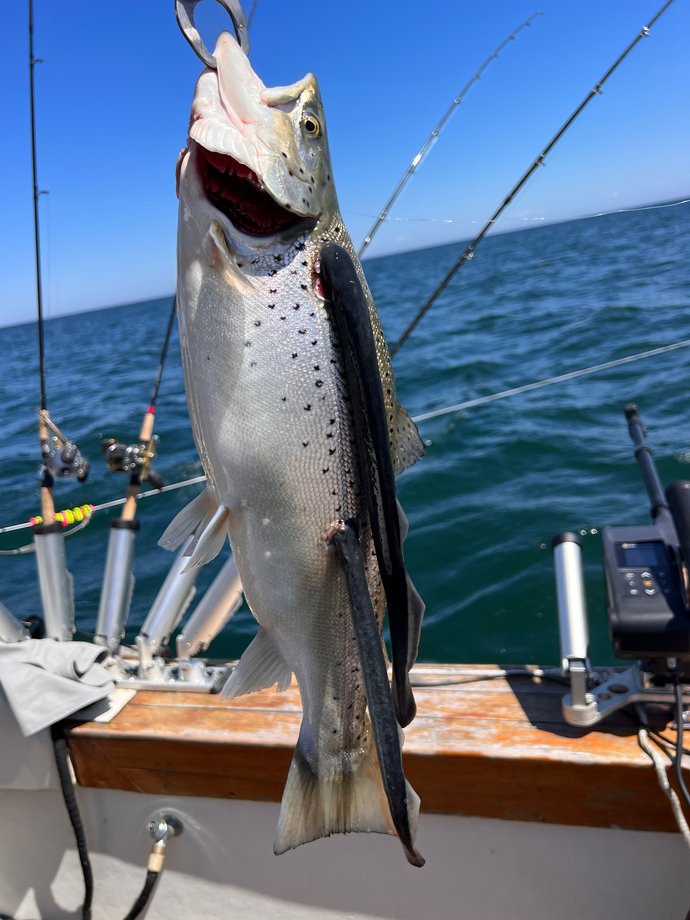
The organisms pictured are the five lamprey species of the Great Lakes. Lampreys are ancient fish, most well-known by the species that parasitize other fish, though about half of the known lamprey species are non-parasitic. The lamprey with the massive mouth dominating the top left of the photo is a sea lamprey, a species parasitic and invasive in the Great Lakes region. The four smaller lampreys are all native to the Great Lakes. The two in the middle are parasitic, and the two on the outside are non-parasitic. Of these five lamprey species, only sea lampreys are harmful to fish populations. The reason is apparent from the photo: the dramatically larger size of the sea lamprey leads to a substantially greater need for fish blood, a need typically lethal to fish—each sea lamprey will kill up to 40 pounds (18 kilograms) of fish during its parasitic stage. Before a control program was enacted in the Great Lakes, there were 2.5 million sea lampreys killing a staggering 100 million pounds of fish each year!
As a result of the harm caused to important Great Lakes fish species, a science-based control program for invasive sea lampreys began in the 1950s, which has led to a 90% decline since their historic highs. Sea lamprey control is coordinated by the Great Lakes Fishery Commission (the Commission) in partnership with the U.S. Fish and Wildlife Service and Fisheries and Oceans Canada, with science support from the U.S. Geological Survey. The sea lamprey control program is considered one of the most cost-effective and successful invasive species suppression programs in the world and an essential component of protecting economically valuable Great Lakes fisheries.
A science-based control program for invasive sea lampreys began in the 1950s, which has led to a 90% decline since their historic highs.
The Commission’s sea lamprey control program, as well as sea lamprey and fisheries research programs, are federally funded through the governments of the United States and Canada. Because these activities are supported by taxpayer dollars, the Commission strongly values and has implemented a long-standing (30+ years) communications program to inform the public about how their taxpayer dollars are used.
Two additional, critical reasons necessitate the communications program: 1) communication is vital for maintaining funding for the Commission’s full suite of programs, and 2) communication is essential to maintaining the social license to control sea lampreys. The social license refers to unwritten, informal acceptance and support from the public for an organization’s activities, in this case, the sea lamprey control program.
A science communication strategy for protecting fish and fisheries
To communicate about sea lamprey control and research, the Commission employs a team of science communicators who engage with audiences across the Great Lakes region. The work of the communication team is guided by a communications strategy, which is a living document updated regularly and reflective of the joint needs of the Commission and society. The Commission’s communication strategy involves setting clear and achievable goals, then determining target audiences, messages to convey, and methods most likely to reach those audiences.
Goals are essential to any activity—science communication and beyond. The primary goal of the Commission’s communications program is to expand the Commission’s interactions with primary audiences with the hope that those audiences will 1) better understand the Commission’s mission, 2) appreciate the ecological and economic benefits that the Commission’s programs provide to society, and 3) initiate actions or behaviors that support the Commission’s work.
Knowing target audiences is critical to developing appropriate levels of messaging and determining which methods are best suited to the engagement. Primary audiences for the Commission include elected officials, partner agencies, and members of the “engageable public,” defined as a segment of the broader public that either currently cares about the Great Lakes, fishing, environmental stewardship, etc., or is likely to care after some degree of interaction. The engageable public encompasses Great Lakes scientists, Great Lakes managers, the media, the fishing public, environmental and civic organizations, educators, students, and more. The distinction between the engageable public and the public-at-large is important—with finite funding and staff time, reaching the public-at-large is unachievable. By focusing efforts on the segment of society most involved and interested in our work, we achieve the greatest return on investment for our efforts.
The main messages of science communication frequently revolve around work in action (methods, results, discoveries, and applications), raising awareness and interest in science, and inspiring audiences to complete specific activities (e.g., a “call to action”), while also fostering trust and understanding between science and society. The primary messages of the Commission are varied, but frequently relate to the value that Great Lakes sea lamprey control and native fish restoration bring to society, the importance of science to the activities of the Commission, and a call to action for audiences to share what they have learned within their own networks.
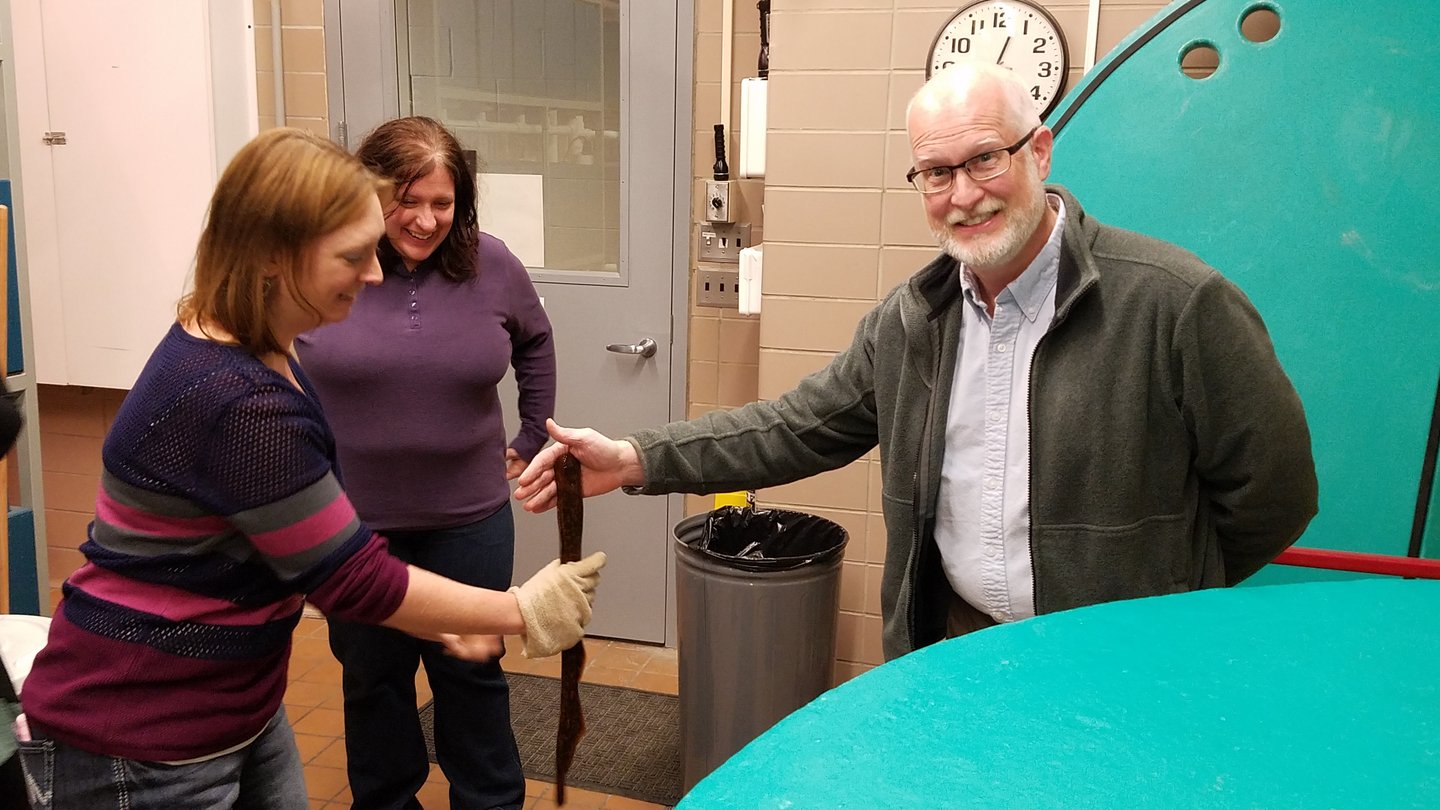
Methods run the gamut from in-person to online, written to oral, and across a variety of mediums. The communications team at the Commission implements a variety of methods, including one-on-one interactions with the public, consistent engagement with the mainstream and emerging media, development and maintenance of a website, use of social media, and development of various communication products including videos, fact sheets, brochures, activity booklets, and press releases. Sea lamprey mouth stickers, temporary tattoos, full-length models, coasters, bottle openers, and even face masks (during the COVID-19 pandemic) have been created to convey our messages. One of our primary secrets to success is that we use live sea lampreys in our engagement as often as possible. We have found that these peculiar parasites elicit strong, visceral responses. They are one of the most effective methods for conveying messages that resonate and for creating memorable engagements. Though we’ve held thousands of sea lampreys in our hands, we vividly remember the first time we saw a live sea lamprey—the memories are permanently etched in our minds, like the mark a sea lamprey leaves on a fish!
Science communication: A value beyond measure
To state that science communication has a value beyond measure feels right to us as science communicators, but the statement is admittedly vague, so let’s look at a few stats from the Great Lakes Fishery Commission perspective. The Commission’s communications program comprises 2% of our total organizational budget. Yet, with this comparatively modest budget, the communications team makes an outsized impact. Science communication is fundamental to all activities of the Commission, from securing funding for control and research, to maintaining the social license for control, to obtaining permission from landowners for access to field sites, and more. Great Lakes fisheries generate $5.1 billion in economic output each year and directly support 35,000 jobs in addition to hundreds of thousands of jobs related to tourism, navigation, and more. And as the unplanned reduction in sea lamprey control effort during the COVID pandemic recently illustrated, sea lamprey control is essential to protecting fish and fisheries in the Great Lakes. Without the communications program, the ability of the Commission to control sea lampreys and protect Great Lakes fish and fisheries would be significantly more challenging.
Beyond these tangible benefits that science communication brings to Great Lakes fisheries, there are many additional contributions that science communicators from the Commission and all scientific organizations provide to the people of the Great Lakes region. Science communication promotes scientific literacy in the public, fosters public trust in science, and supports sound policy making. Science communication helps people make informed decisions that impact their lives, their communities, as well as future generations. Finally, science communication makes people excited for learning and connecting with the world around them. These benefits, and the many others that science communication brings, are truly invaluable.
PRO TIP: Always be willing to jump on opportunities!
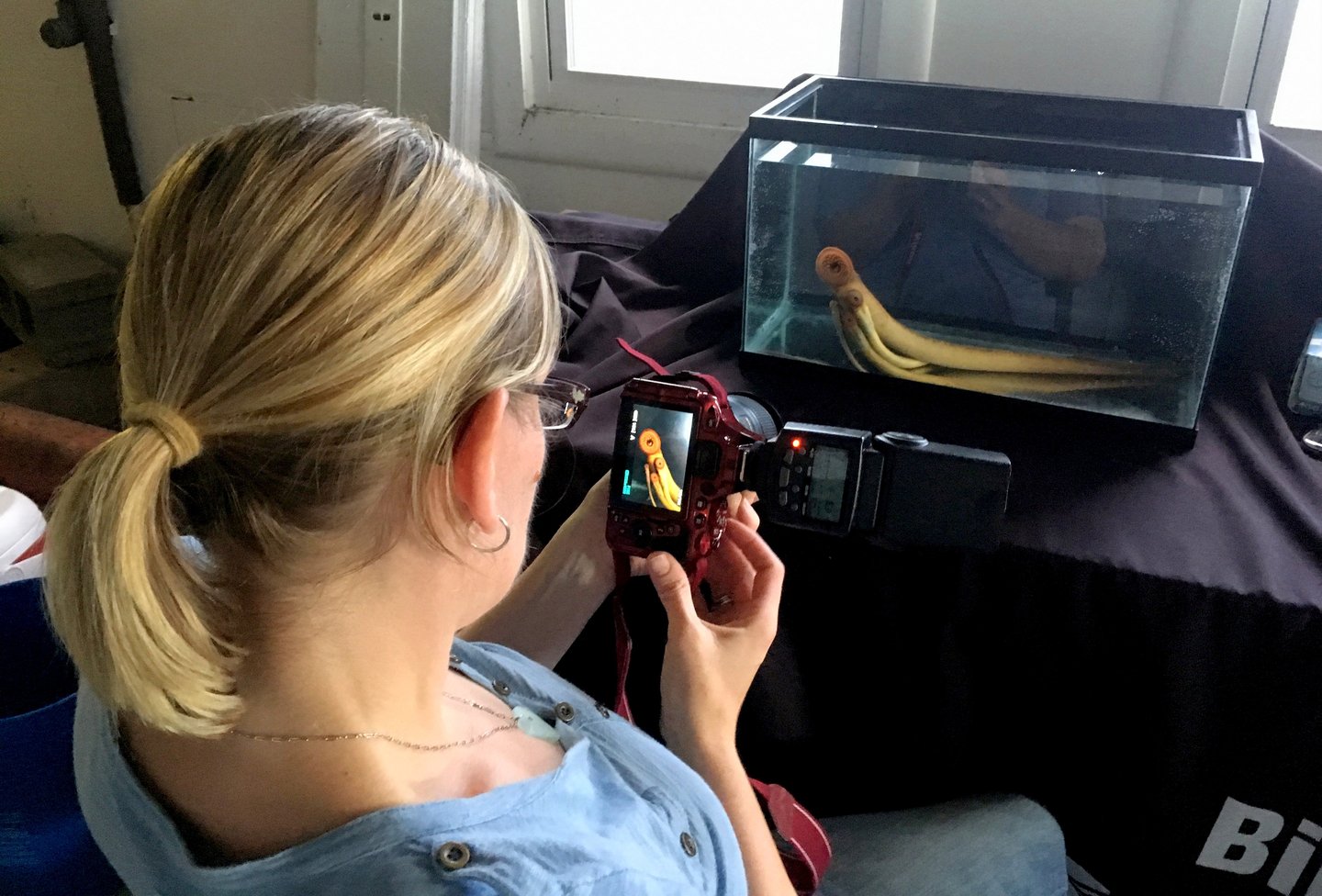
Our photo of the five Great Lakes lamprey species at the top of this article has received considerable attention over the last few years, most recently being published in a National Geographic article. Although the photo has enjoyed high-profile coverage, the story behind the photo is less glamorous. The photo was taken opportunistically on a typical Wednesday at work. Tyler Buchinger, a visiting scientist, arrived at Hammond Bay Biological Station with live lampreys and offhandedly suggested to Communications Associate Andrea Miehls to photograph the five species together. Dropping other work activities, with no pre-planning and using only materials scavenged from around the station (and personal camera equipment), the communications team set up a temporary photo studio in the only space they could find—a well-trafficked hallway. Was it an ideal location for a photoshoot? Absolutely not. Did it work? Absolutely. Looking back, we are incredibly grateful we jumped at the opportunity to take the five-species photo. Our primary lesson learned? Take advantage of opportunities when presented (and always carry a camera)!