The first question a communications expert often will ask a researcher coming to them for help is: Who is your audience? But effectively communicating about research and science requires far more than knowing who you are targeting, especially if you want to be strategic and ensure the results will have their intended impacts.
Beyond knowing who your audience is—and how you are going to reach them—a key part of effective communications is knowing what your end product is going to be and having a vision for that deliverable from the beginning. This advance planning is important for several reasons. First, and perhaps most important, it requires a discussion and thought about what products the research is working towards. Second, planning in advance will highlight whether and how much funding will need to be earmarked for communications-related activities. These tasks may include hiring a communications strategist or graphics designer; gathering photos or video; capturing quotes and sound bites along the way; and other activities as needed.
Perhaps most critically, advance planning should include a pathway for providing interim results and ongoing information to keep critical audiences engaged throughout the research process. This engagement can help build trust, provide opportunities for feedback, and lead to a better understanding and acceptance of the results and products.
“Communications planning needs to be baked into the research design from the beginning to ensure the most useful product for whomever is the end user of the research findings,” says Lauren Mullenbach, research program manager for Michigan Sea Grant (MISG). “And this outreach needs to occur throughout the lifetime of the research project.”
Communications planning needs to be baked into the research design from the beginning to ensure the most useful product for whomever is the end user of the research findings.
According to Mullenbach, telling the story of the research and science along the way—including by sharing photos, videos, summaries, and other materials—can lead to more powerful impacts. One way to continuously engage audiences is by creating community advisory boards at a project’s start. “Involve stakeholders, end users, and community members through a formal paid advisory committee position,” Mullenbach advises. Such boards are most relevant for larger projects that last five to 10 years and should comprise people from the community who are the target audience, she adds. The board can be a funded part of the project and regularly apprised of data collection progress and other aspects of the project.
The following projects provide good examples of research in which communications was considered at the outset of a project, enhancing the final product or deliverables. In some cases, engaging community members early or finding local, trusted messengers led to improved outcomes. In others, researchers gained insight by getting input and feedback on how audiences would like to receive information.
Stakeholder Input
One MISG project on mitigating flood risk in Great Lakes communities included a stakeholder advisory board that provided opportunities for residents to help prioritize future projects. In this case, engineers are modeling how to mitigate flooding in Benton Harbor, Michigan. An advisory board is supplementing this work in two key ways: first, by providing additional details on what actually flooded and when for historic floods; second, by helping to identify key assets in the community that need to be protected because of their value to residents.
“The engineers may have provided the best, most efficient way to mitigate flooding, but their plan may not align with what the community actually needs and values,” says Mike Shriberg, MISG Director of Engagement. “If the project team hadn’t involved this group from the beginning, then new projects for flood mitigation may not have addressed the communities’ biggest concerns.”
The project team pulled together a group of community leaders that included the city planner, economic development coordinator, and other key representatives. This group provided input on what aligns with community priorities. The team used a unique approach in which the board provided input on large-scale maps on which group members helped identify areas of greatest risk.
“Future mitigation projects in this area are prioritizing community needs and using members’ real-world experience with flooding and their priorities, overlaid with the technical design,” says Shriberg.
This project is a good example of how the standard-issue, depersonalized report that does not speak to specific local issues would not have landed well. Using visuals such as maps that combined community input and geographic information led to a better end product. The process also allowed the team to connect better with their audience because displaying multiple types of data in storytelling fashion can prove more compelling than a traditional research report.
Feedback Opportunities
Another MISG project is providing fisheries managers with the information they need to make important decisions about stocking levels and fishing regulations. In this case, lead principal investigator Dan O’Keefe, senior extension educator, MISG Southwest District, knew how important it would be to provide a way to gather quality data from anglers and to give regular feedback to a variety of audiences.
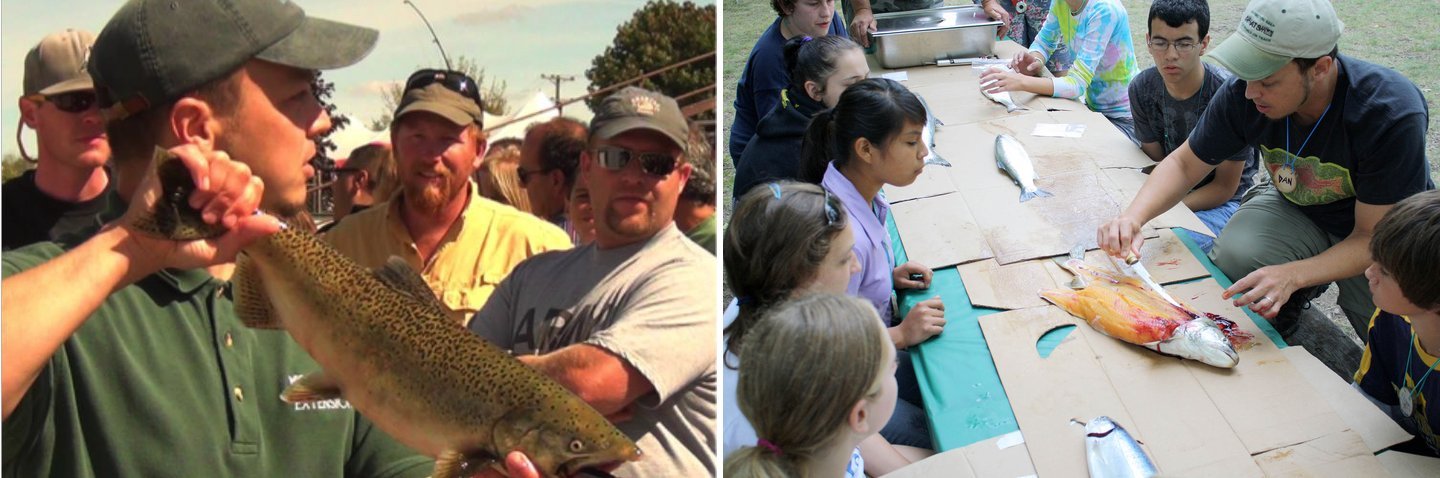
As a result, they developed a suite of digital assets including web content and the Great Lakes Angler Diary app so anglers can submit numerical and geographical data about fish they catch. The project uses teams around rivers and watersheds in the state to capture data and includes leads from the state agency side along with respected members of the fishing community like a writer, guide, or angler. Each year, the entire group participates in a kickoff meeting during which the project team reminds everyone of the new season and how to log catches and to recruit in areas that do not have enough participation.
“The challenge from a science perspective during these meetings has been to give anglers and scientists and managers enough information to see progress while not overselling the results,” O’Keefe says. “We try to stay away from causality and be careful of trends that we see, because we only have a few years of data at this point and it is not clear whether we are looking at part of a long-term trend or normal variation from one year to the next.”
According to O’Keefe, it’s important to remind people of limitations of the data to avoid any one group jumping to conclusions. “That’s why it is important to do due diligence and hold off on the speculation, especially when there are multiple audiences with varying interests,” he says. “In this case, it really is important to know your audience.”
In addition to the digital products, the team produced an annual survey as part of quality control and requirements, including having people certify that their data are complete, but also to gather input on management, regulations, and stocks. The results of this survey are also shared with everyone every year. In the end, the project team will produce a summary that looks at six to seven years of quality data. This information will be particularly useful to managers, who might decide to tailor regulations to specific variables, such as contributions of stocked versus wild fish populations, the impacts of dams and habitat quality, and other issues such as the effects of non-native species.
“Good science that managers can make good decisions on,” says O’Keefe.
A variety of tools
MISG’s Sustainable Small Harbors project is helping communities with struggling public harbors to develop plans and secure funding to ensure their sustainability. This effort, a collaboration with the Michigan Department of Environment, Great Lakes, and Energy, involved partnering with experts and local leaders to help community members brainstorm a sustainable future for their public waterfront assets.
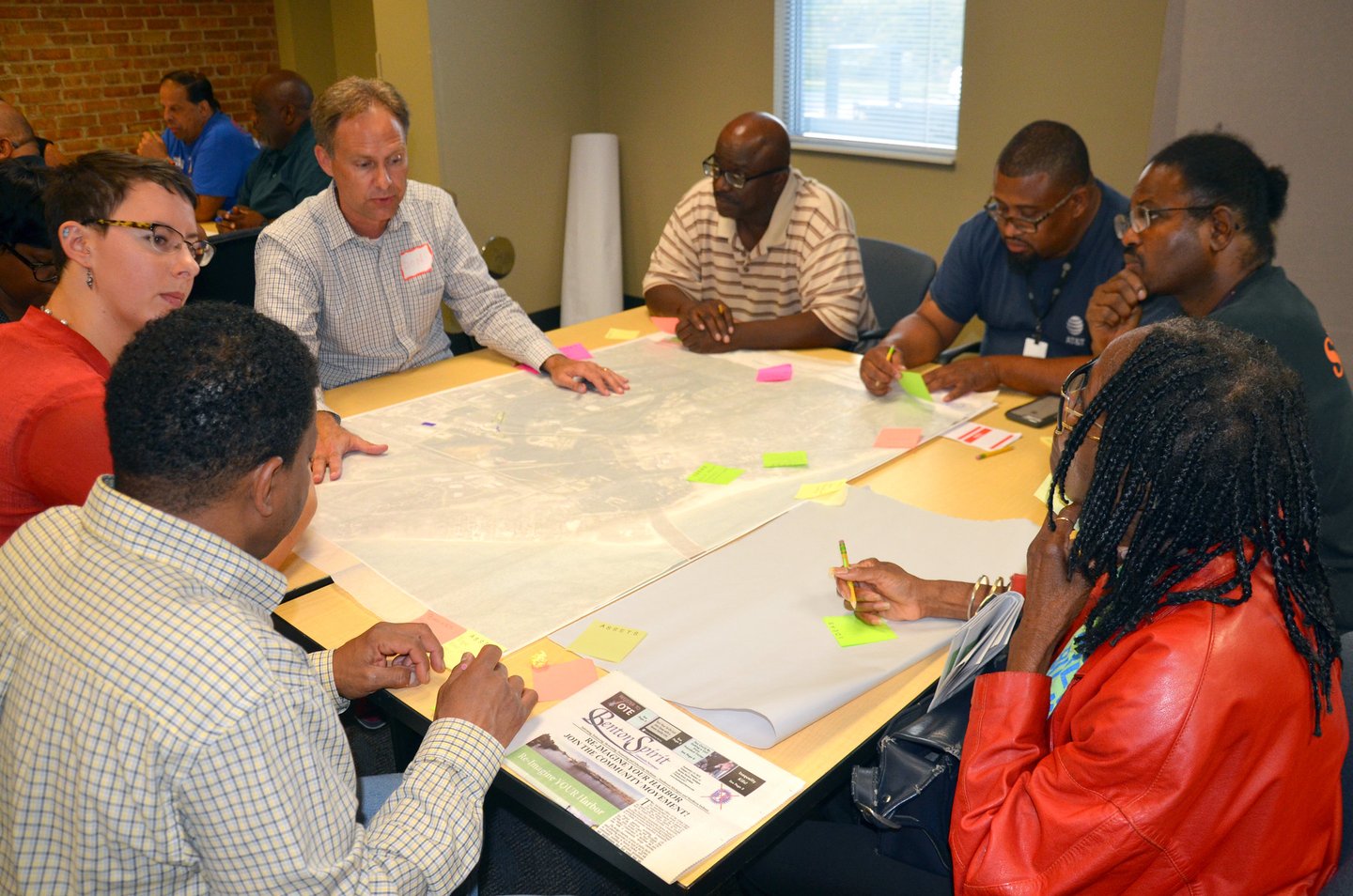
“We really had to be intentional about our outreach and communications from the very beginning of this project,” states project lead Don Carpenter of Drummond Carpenter PLLC. “Residents’ input was so critical to the products we planned to develop, so we needed to ensure that they participated and that we captured their input accurately.”
Because some of these communities were small and relatively isolated, the project team used a variety of methods for initial engagement of members of the public, including radio ads, flyer distribution, and webinars. In each of the case study cities, the project team designed workshops geared to gathering input from community members with their ideas on how to develop and prioritize ways to make their waterfronts more environmentally, socially, and financially sustainable.
“The information we gathered from members of the community was used to develop resources and other materials that will support local government, coastal communities, planning and economic development organizations, and others to ensure the sustainability of their waterfront areas,” says Carpenter.
Results were captured in a variety of products, including a guidebook, decision-making tool, webinars, and ArcGIS Storymaps. The project website also features the recorded webinars and a series of success stories for small coastal communities seeking resiliency, and new and improved coastal resiliency tools. All of which helped community members and local decision makers see the results of their input and use the compiled information in a meaningful way.