Don’t be shy. In a time of mass cynicism, scientists enjoy public credibility to an extent that would please any officeholder. A Pew Research public opinion survey conducted last fall found that 76% of Americans express a great deal or fair amount of confidence in scientists to act in the public’s best interests and majorities view research scientists as intelligent (89%) and focused on solving real-world problems (65%). Imagine what a member of Congress or a state legislator would do with that.
In one area, however, the public found scientists lacking: communication. Of the more than 9,000 U.S. adults surveyed, 45% described research scientists as good communicators. Meanwhile, 52% said this doesn’t describe research scientists well.
There’s a cure for that—a willingness and training to speak scientifically to both policy makers and the public.
And there is an urgent need for that. Science-based policy for the Great Lakes faces the headwinds of ideological dogmatism and ignorance on the part of decision makers. That is not unique to our region, but the solution can be. There is, for example, a modest amount of trust in Great Lakes science among officeholders thanks to the success of the Great Lakes Restoration Initiative.
There is also a long-running perspective. I asked John Gannon, a retired senior scientist at the International Joint Commission and somebody I trust, to reflect on his experiences bringing scientists into the policy fray.
“I experienced the reluctance to communicate science to a wider audience during my career,” John said. “I encouraged staff to do more communications to the public. The majority said ‘no, because that takes time away from working on papers for peer-reviewed publications and that’s how my performance is rated for job retention and promotion.’”
He added: “I used to do all kinds of presentations in collaboration with the Great Lakes Fishery Commission, the Great Lakes Commission, and the Great Lakes Environmental Research Laboratory to inform the Great Lakes congressional delegation of the important work we all did and why they should support us. Feds can’t lobby, but we sure can provide information.”
John said, “The lack of sufficient communications and outreach emphasis is spelling real trouble these days.”
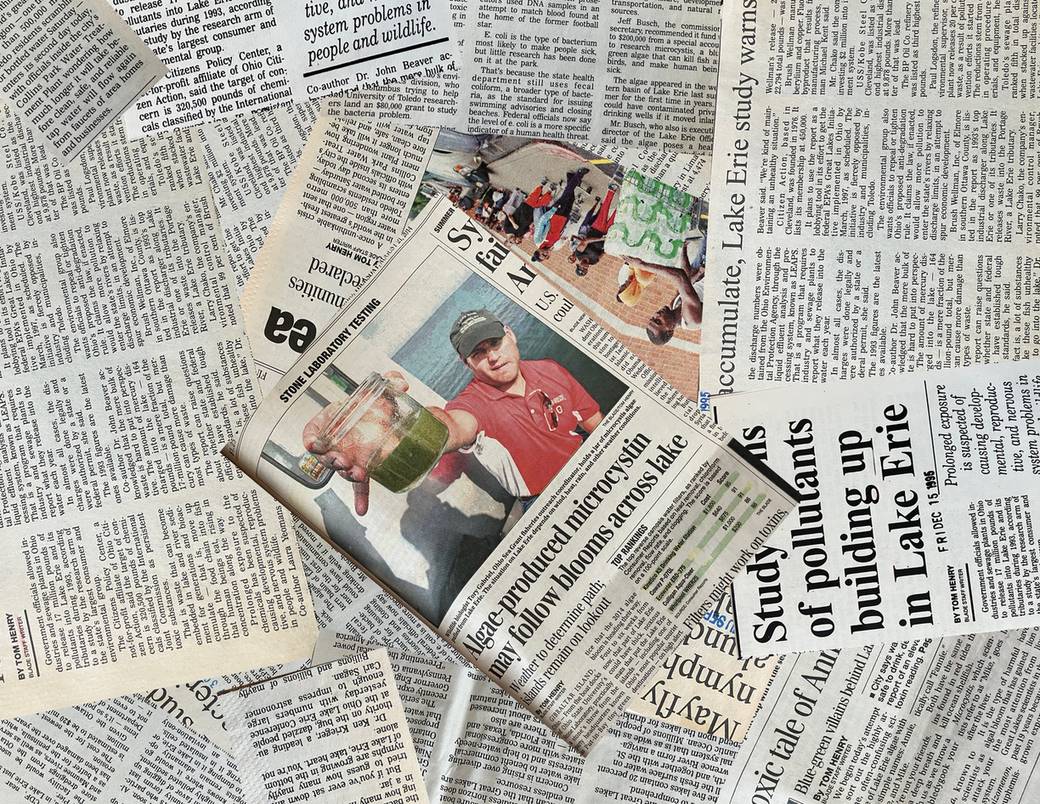
The IJC itself brought groundbreaking science to the policy of fighting against algae blooms on Lake Erie in 1970. The scientific model developed predicted how much reduction in phosphorus from point sources was necessary to reduce algal blooms. It worked.
Michigan’s history contains an early, successful example of science informing good policy. Aided by friends in high political places, the lumber industry slaughtered 99% of the state’s original forest cover in a mere 70 years, ending around 1920. Lawmakers gave no thought to what would become of those lands next. Millions of acres of land were forfeited back to the state for nonpayment of taxes.
That could have sentenced two-thirds of Michigan land to economic, environmental, and social stagnation. Instead, scientists built the case for replanting the forest lands in the public interest. Dr. William Beal of Michigan Agricultural College and Dr. Filibert Roth at the University of Michigan were two of the experts who, working with civic groups, persuaded the legislature to launch the grand forestry experiment. Their vision has blossomed into almost 4 million acres of state forest land, a constantly renewing resource for wood production, recreation, and nature study.
These examples illustrate the importance of continuing to pursue and share science for the public good, even in challenging times. It’s a long game and requires persistence. We must now forge a new era in Great Lakes protection based in large measure on solid research and communication of its results to policy makers and the public. There is no time to hesitate.