Describe your work or studies.
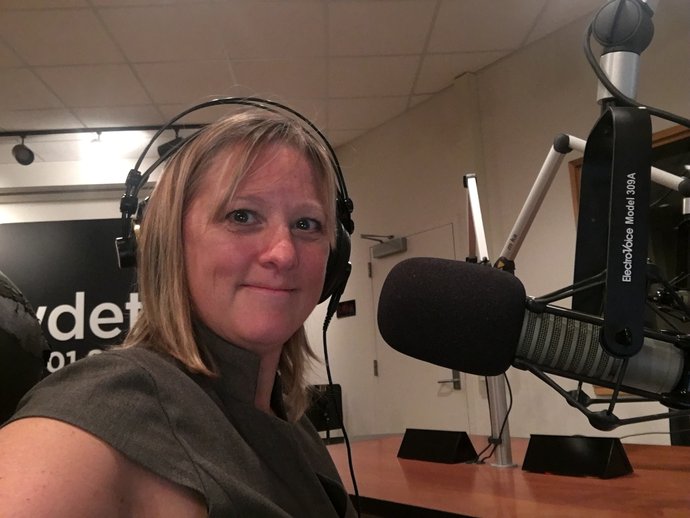
Well, I am the envy of all my science communication buddies, because I somehow managed to wrangle a gig as the communications manager for IISD Experimental Lakes Area—the world’s freshwater laboratory up in northwestern Ontario, Canada. It’s quite the unique freshwater research facility and the job allows me to flex multiple science communication muscles—reaching everyone from policymakers to the general public, through a portfolio that spans weighty policy briefs, provocative opinion pieces, and more irreverent TikToks (I actually enjoy them all equally). An inherently photogenic subject, IISD-ELA also benefits from a broader institutional culture that supports and prioritizes communicating with the outside world, which is only ever a boon, as far as I am concerned.
What inspired you to enter this work?
Honestly, I somewhat fell into it. My career had spanned everything from Spanish teacher to public relations professional before I decided that I should convert my natural proclivities towards the English language into something more substantial and, ahem, lucrative. I have worked in a range of communications jobs (not all science focused), which have taught me that robust communications skills should be transferable to almost any discipline. That’s why I tend to refer to myself as a communications professional (happily) working in the sciences, as opposed to a science communications professional. That said, focusing in on the limnology of it all has proven to be a steep yet vastly rewarding learning curve.
What advice would you give to scientists to effectively communicate their science?
I love this one! Trying out your science communication messages on people you know who represent different slices of society is a great place to start. So, say, find a 6-year-old child, a 24-year-old who does not work in the sciences, and a 65-year-old who does, and try to explain a scientific concept to them, starting from the place you think works best for each respective audiences. Then actively listen to their responses, challenges in understanding, etc., and use them to rework your messages. It will provide you with some great real-life evidence of what works for whom! WIRED does a great series on this.
Trying out your science communication messages on people you know who represent different slices of society is a great place to start.
What is something about yourself that you’d like to share with other IAGLR members?
Frankly, I am obscenely dull, but I do have a few nuggets to throw out there. I am obsessed with the Spanish-speaking world. I am trying to visit every U.S. state (currently on #29). I love cats although only ever owned one for six months—don’t ask. There are Led Zeppelin albums whose lyrics I could recite backwards and inside out with minimal effort. I use my charming British accent daily to mask a multitude of personal and professional limitations. Oh, and in another life, I would have been a traditional Chinese Medicine practitioner.