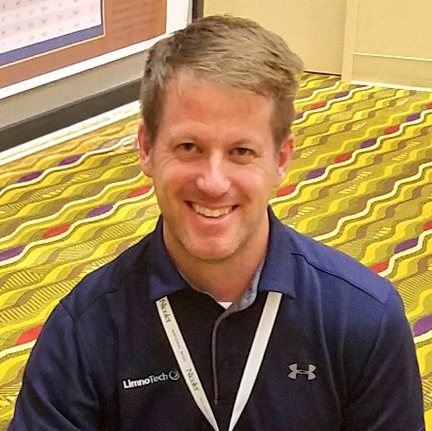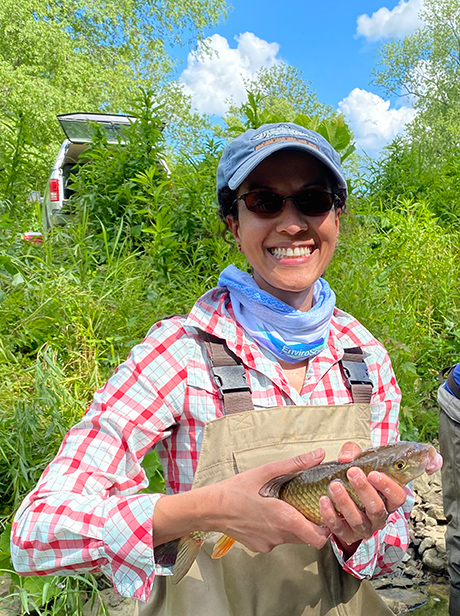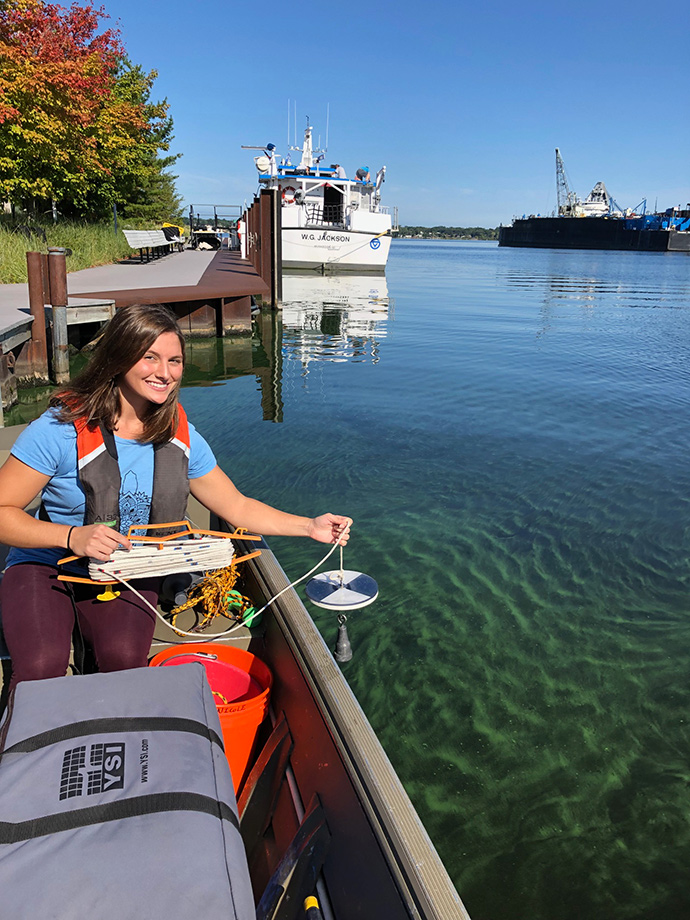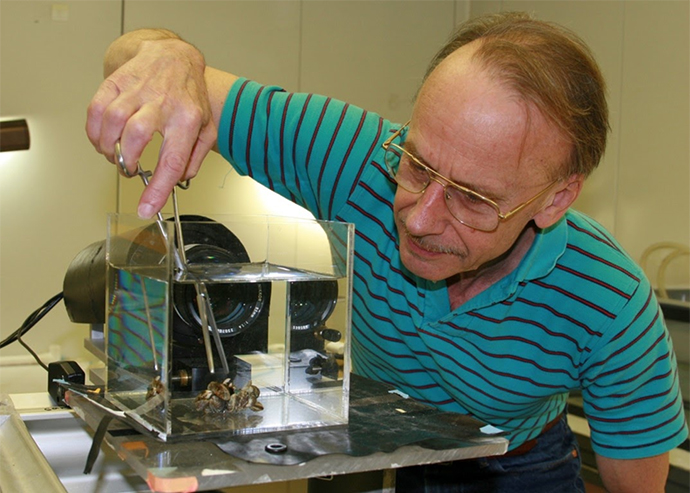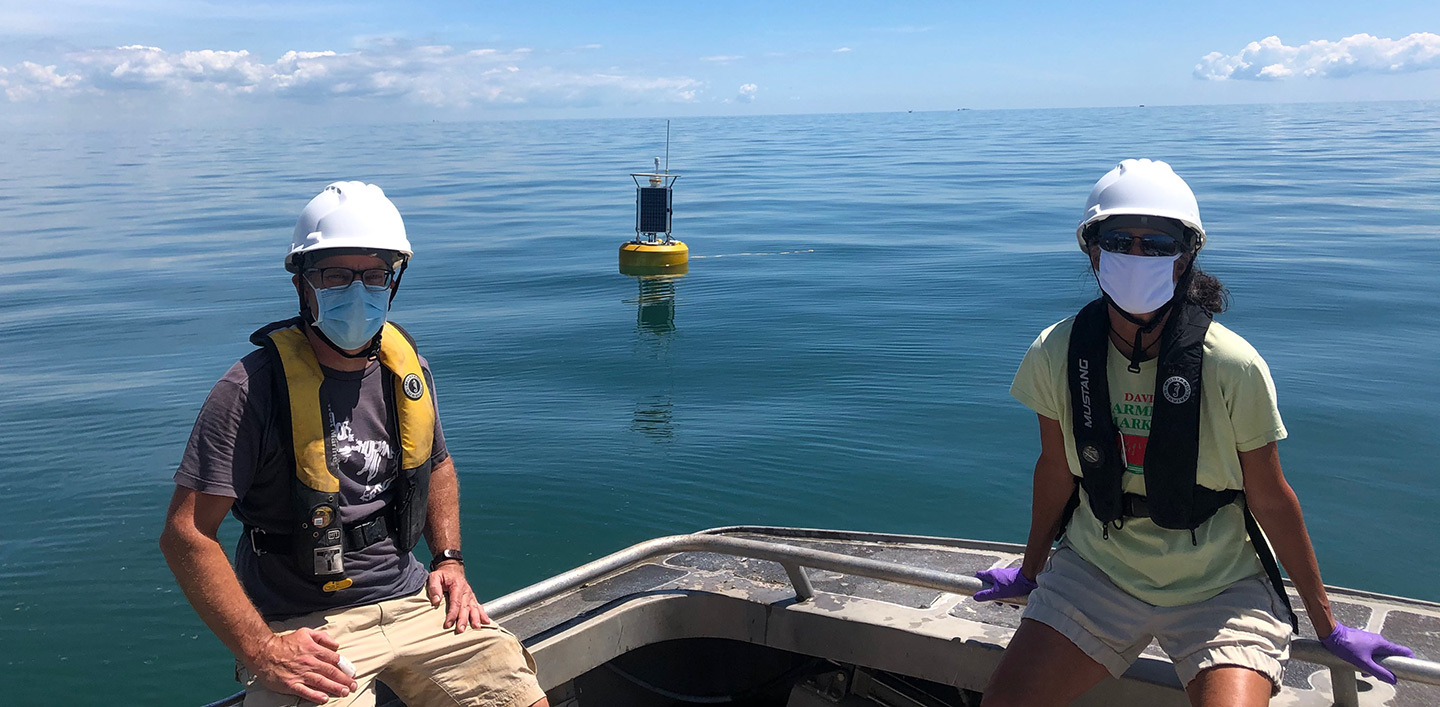
researchers Russ Miller and Heidi Purcell deploy a Realtime Coastal Observation Network buoy in
western Lake Erie, 7/14/20. Credit: NOAA GLERL.
Think back to the annual IAGLR conference in Brockport, New York. It was business as usual; the last time we physically gathered to hear about, discuss, and debate the most pressing science and policy issues of the Great Lakes. Who could have predicted the situation in which we now find ourselves? The onset of the pandemic in the early part of 2020 has affected every sector and demographic of global society, and many of us have been forced to modify our lives in ways we neither could have predicted nor imagined. One of the “COVID casualties” was the annual meeting, although this did present the opportunity to gather virtually for the first time in the history of the association. At the time of the meeting, the potential scope and significance of the impacts of COVID on Great Lakes science and policy were beginning to emerge. It seemed fitting, therefore, to delve more deeply into whether and how COVID-19 has impacted research and policy in the Great Lakes basin, and this subject constituted the first panel discussion of the virtual meeting.
The panel discussion was chaired by Dr. Paul Sibley (University of Guelph) and guest panelists included Dr. Gail Krantzberg (McMaster University), Dr. Donald Uzarski (Central Michigan University), and doctoral student Rene Shahmohamadloo (University of Guelph). The discussion was guided, in part, by a series of questions: How has COVID-19 impacted research and policy in the Great Lakes basin? Will the effects of COVID be short-term or long-lasting? Are there opportunities to change how we manage Great Lakes research in the future? Can restoration initiatives be used to stimulate economic recovery after COVID-19?
With an audience of over 150 attending the panel discussion, each panelist was provided an opportunity to relate their experiences and express their concerns about the impact of the pandemic. The emerging consensus was that there is and will continue to be an impact on research and policy, but that it is too early to know the full extent and nature of the impacts. We heard about the difficulty in conducting research in the face of building and office closures, recommendations for physical distancing, and requirements for personal protective equipment (PPE). Early on in the pandemic, PPE was difficult to obtain, which hindered efforts to ensure researcher safety. Agencies that were forced or chose to shut down were no longer able to fulfil their obligations to the research programs in which they were participating. This will lead to a loss of sampling effort and potentially important data for those programs. Further, many government agencies were forced to shut down or significantly scale back activities, including environmental monitoring; these data are now lost, as is the opportunity to better understand how Great Lakes ecosystems might have responded, at least in the short-term, to the significantly reduced inputs of environmental pollutants during the pandemic. Investments in remote sensing platforms, which are largely unaffected by pandemics, may be one way to overcome this monitoring vulnerability in the future. Finally, in Canada at least, the federal government has rightfully directed significant dollars to COVID-related research, but as governments are forced to reconcile ballooning deficits, one wonders how this might affect funding for future non-COVID research programs.
It is the mid-term graduate students who may be most affected, unable to start new experiments or complete experiments or field sampling already underway.
Graduate students, who constitute arguably the most important constituency in creating and advancing our understanding of the Great Lakes ecosystems, could be significantly impacted, but this will depend on where they are in their degree programs. Later-stage graduate students are less likely to be affected, as they may have completed their research requirements and are focusing on writing and publishing. We heard about students whose entry into graduate programs has been delayed and of those whose programs have been modified to accommodate the situation and new requirements created by the virus. It is the mid-term graduate students who may be most affected, unable to start new experiments or complete experiments or field sampling already underway. Graduate students have expressed much anxiety and fear stemming from the uncertainty forced upon them by COVID. We must keep in mind that considering the mental health implications for students facing significant changes to research and teaching is just as important as the physical and administrative aspects of the research programs. With this in mind, many universities, with assistance from local and federal governments, have offered financial assistance to students whose funding may have been temporarily terminated, and relaxed completion requirements to accommodate the expected longer times to completion.
It is easy to focus on the negative aspects of COVID, but it was also clear that the pandemic represents an incredible opportunity to embrace and enhance Great Lakes research initiatives; this could even fuel economic recovery in the basin. The Great Lakes Restoration Initiative is an excellent example. On the chopping block early on during the current U.S. administration, the governors of the Great Lakes states, community interest groups, environmental groups, and academics initiated a campaign to stop the defunding proposal, which, at ~$300 million, was miniscule compared to the overall U.S. budget. The decision was eventually defeated. Why? Because an evidence-based approach showed that this would lead to job losses (never a politically astute move), and that the return on investment, as shown in a recent IAGLR report, is as much as 3:1. In other words, investment in the environment could be used as an effective tool to promote economic recovery in the Great Lakes basin. Given the economic impact of COVID on the Great Lakes region, a strong argument can be made that funding of restoration and other research initiatives in the Great Lakes basin should be significantly increased. Failing to do so may be a significant opportunity lost. One example presented to the audience is tracking the movement and viability of the SARS-CoV-2 virus in wastewater effluent. What is the virus load in wastewater? We know that it is excreted and likely to be found in wastewater, but not whether the virus is viable and transmissible in this state, and whether it poses a risk to those recreating in areas receiving wastewater effluent.
It was also clear that the pandemic represents an incredible opportunity to embrace and enhance Great Lakes research initiatives; this could even fuel economic recovery in the basin.
Participants also spoke about the advantages and disadvantages of attending a virtual conference. Clearly, with the cancellation of the annual conference, we all lost one of the most important opportunities for attendees—to engage in the hallways, form collaborations, and share personal interactions as we discuss Great Lakes research and policy. This is particularly difficult for graduate students who may wish to speak directly and personally with influential researchers in their field to gain important feedback on their science and methodology, but also in making important connections as they develop into scientists in their own right. On the other hand, a virtual platform is also an opportunity for those who would not have attended in person to participate in the conference; that a virtual delivery model is more accessible is a point underscored by the nearly 550 registrations for the conference. While personal connections may be diminished with virtual delivery, they are not completely lost, and there is always the benefit of a reduced carbon footprint. In the future, it is likely that hybrid formats combining in-person and virtual attendance will become a successful norm for many societies.
As is the case for almost all entities affected by the pandemic, the extent to which research and policy in the Great Lakes will be affected is uncertain. Perhaps it can be compared to a movie with alternative endings; as the editors, we can choose an ending in which we stand as collective champions for Great Lakes ecosystem health by acknowledging the important, reciprocal relationship between the environment and economy and vanquish the enemy of indifference.