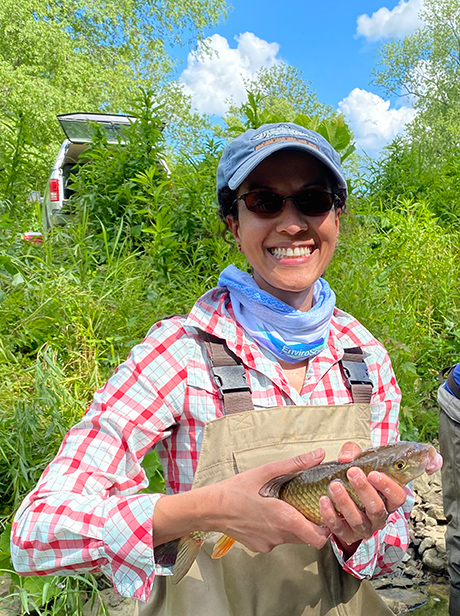
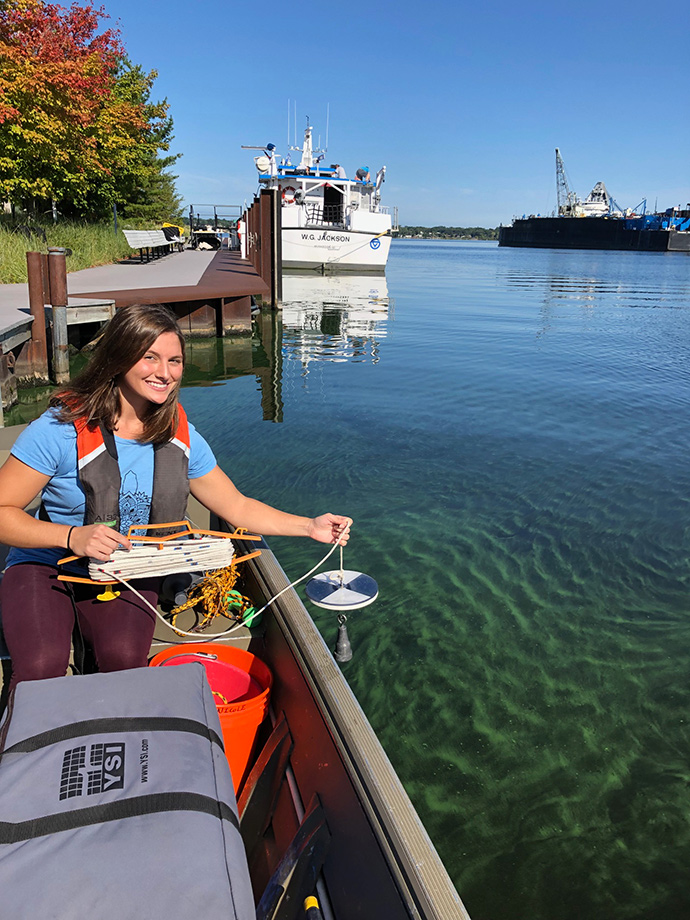
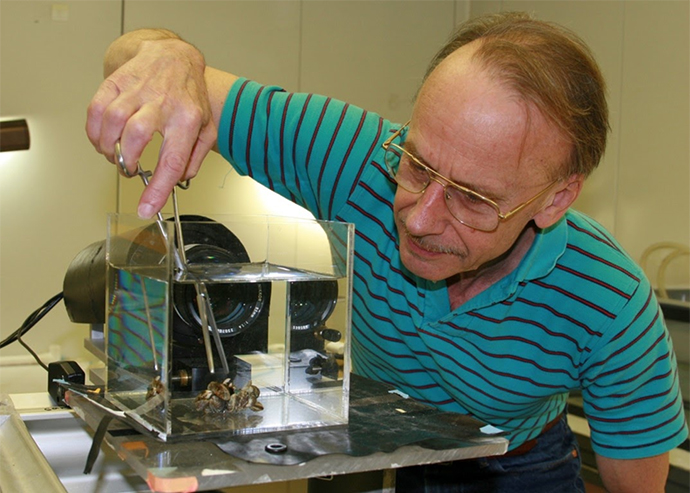
 I supervise 12 research scientists and support staff as well as carry out research as a lead or co-PI on internal and external projects. These projects include studying the spatial structure and function of the food web, from microbes to fishes; invasive species impacts, particularly Dreissena and Bythotrephes; harmful cyanobacteria blooms and grazer interactions; and ’omics applications to understand food web function.
My Pandemic Story
This was to be one of the NOAA Great Lakes Environmental Research Laboratory (GLERL) ecosystems research team’s most ambitious years for doing both field and lab work until COVID-19 surfaced. We know that NOAA is not alone in our frustrations, but it has been challenging. As with our Great Lakes and oceanographic colleagues around the globe, much of our spring field season plans were dashed, and many projects were postponed and needed to be reworked. We all focused on doing our part by staying home and staying safe.
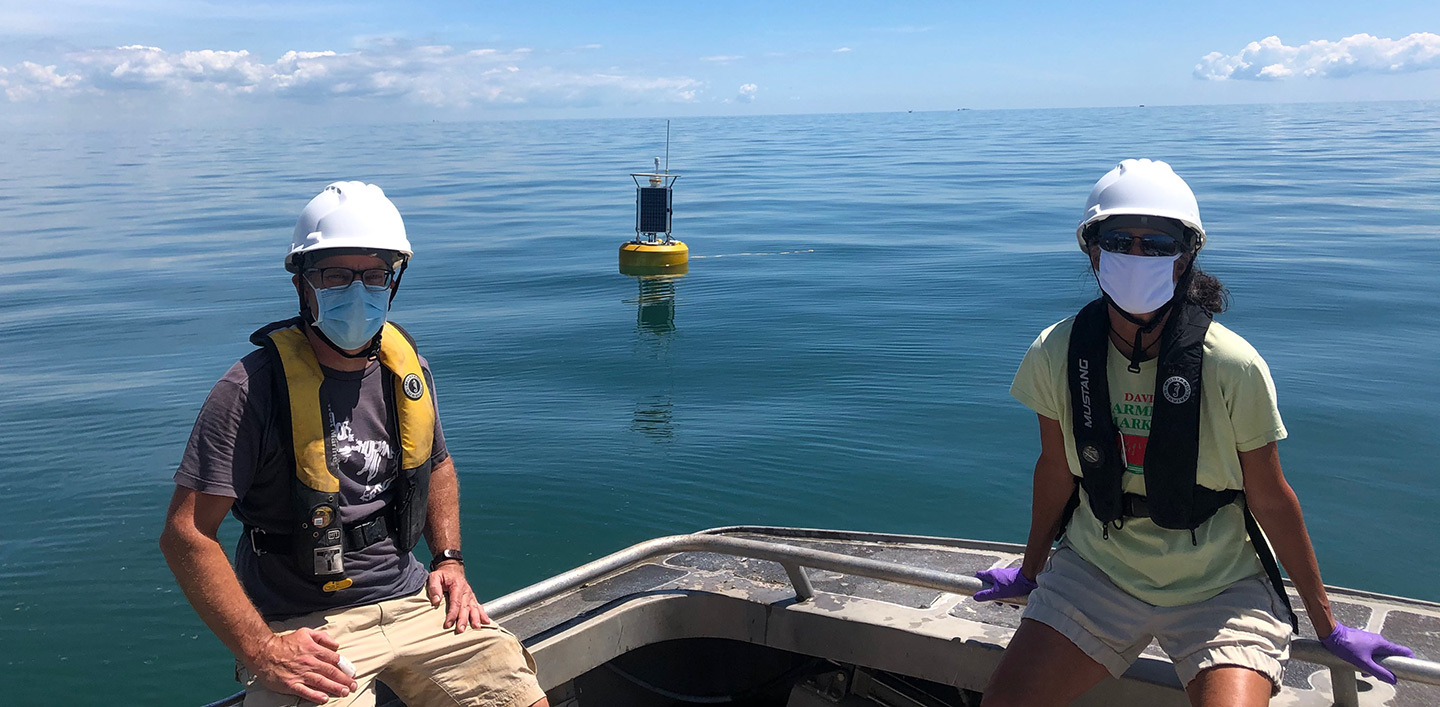
Our long-term, seasonal monitoring program on Lake Michigan carried out by Lake Michigan Field Station staff is finally underway as of early July, and it feels great to be back at it.
In Lake Erie and Saginaw Bay, GLERL and Cooperative Institute for Great Lakes Research colleagues are carrying out a greatly scaled back version of our usual harmful algal blooms monitoring and forecasting project. Funded by the Environmental Protection Agency Great Lakes Restoration Initiative, this work is necessary to address the critical problem of predicting the distribution of toxic cyanobacteria in western Lake Erie for the Harmful Algae Bulletin. Other experiments and projects have also been put on hold due to their intense demand for lab work.
One of the biggest challenges I face as the program lead is the intensive planning for carrying out mission-critical functions in the COVID-19 environment. Although one might imagine that limited field and experimental work might free up time to get major work done on data analysis and manuscript writing, this has not really been possible for me due to the additional contingency planning and other new tasks. It is hard to keep up with my email inbox! Also difficult has been the blending of telework and home life and the need to spend extra time in both arenas because of COVID-19.
It hasn’t been all bad. We did receive increases in funding for a few research programs, and we are certainly adapting to new ways of working together.
A look to the future
Looking forward, I think we might want to consider virtual meetings as a routine option from the point of view of saving on expenses and reducing our carbon footprint. Although I do miss the camaraderie of face-to-face meetings, I thought the virtual IAGLR meeting was very effective, especially considering the short time in which it was put together.