The persistent presence of chemical contaminants within the Great Lakes imposes a disproportionate burden on Indigenous communities; impacting their deep cultural ties and relationships with land, water, and water beings. The presence of contaminants causes concerns around human exposure to chemicals through fish consumption.
To address this issue, the United States and Canada develop guidelines on fish consumption, limiting fish consumption in areas impacted by contaminants. The problem is that this approach continues to perpetuate the colonial narrative of land (and relational) dispossession. How? By saying “don’t eat the fish” or “eat less fish” through guidelines, we are limiting communities access to land- and water-based food sources, diminishing opportunity to connect with the land, waters, and beings that live within. This approach continues the severing of ties and relationships between Indigenous peoples and their non-human relatives. So how can we create a better solution moving forward?
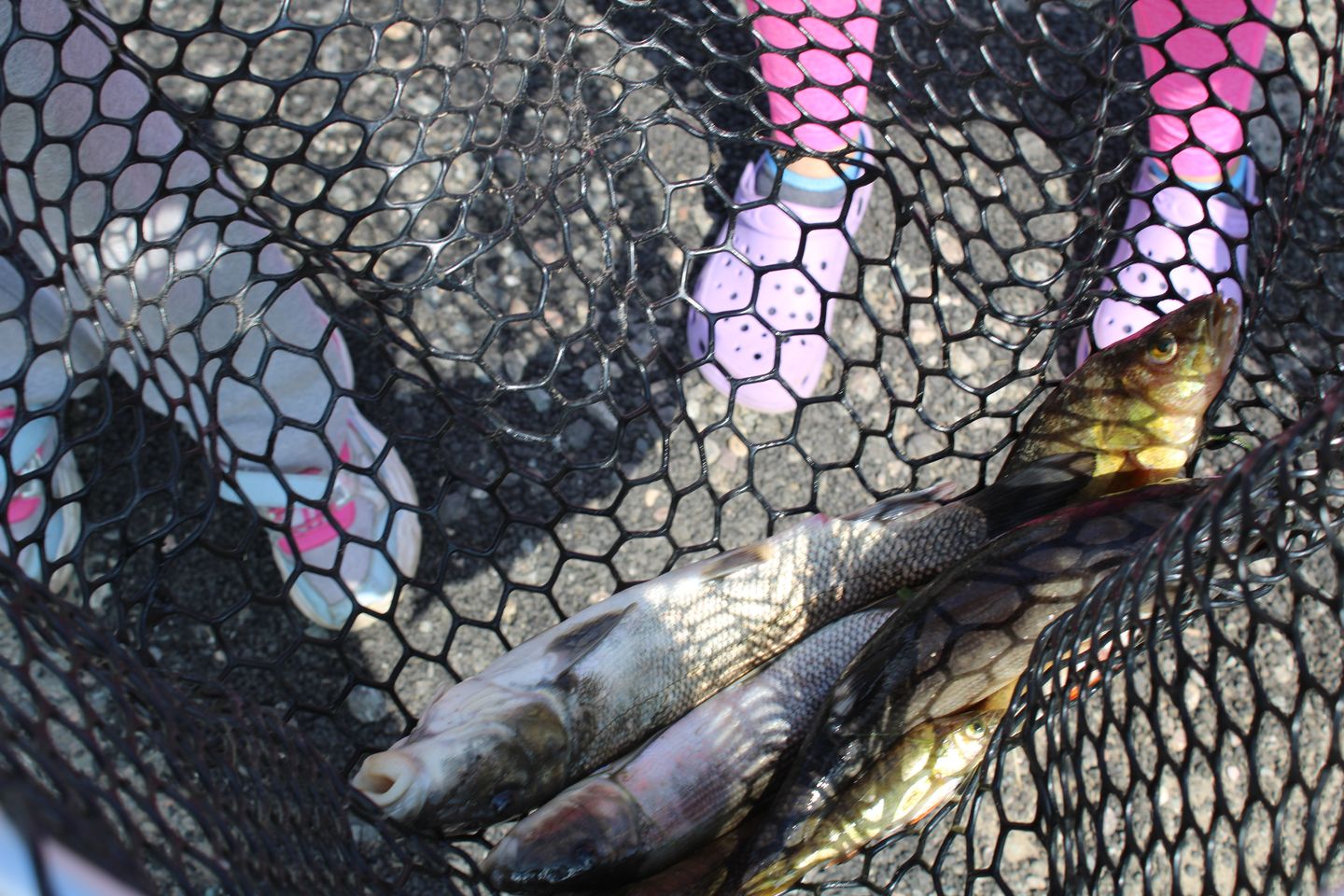
At TRACE Lab, we are working with communities to develop risk mitigation strategies that create opportunities to be on the land, harvest, learn sampling skills, share knowledge, and generate data that are useful for rights assertion and informed fish consumption.
Youth are a vital part of community engagement and must be a part of the entire process. They are at the forefront of dealing with these emerging environmental issues and need opportunities to assist in regulating and addressing the overall health and well-being of their communities. These Indigenous youth will one day be in leadership roles paving the way for generations to come, and being a part of research greatly benefits them.
“My firsthand experience in contributing to community-based research as an Indigenous youth has not only strengthened my connection to my culture, but has also instilled a profound sense of responsibility and pride in protecting our environment,” says Ruth Duncan, TRACE Lab student researcher. “Indigenous youth should be active contributors in research, ensuring that our insights shape a sustainable path for both the present and future well-being of our communities. It is important to note that as youth we are not only the future but the present as well, and we want to be included.”
By co-designing and implementing contaminant surveillance programs, we work together with communities to map areas of importance, visit those areas, involve youth, and harvest and sample consciously with only small portions of fish taken for analysis; the rest can be eaten. This process often involves engaging health professionals as well. The guidelines produced from this approach end up being more specific geographically and typically do not employ a one-size-fits-all recommendation like seen in current government-produced guidelines. This sometimes results in slightly different consumption recommendations, but ultimately the major difference is the process.
Our goal is to support community efforts to protect and/or restore relationships with fish, the land, and waters. It is essential that the whole process prioritizes community knowledge and opportunities to connect with the water and land, reducing opportunities for colonial harm. We are asking our fellow Great Lakes researchers to ask themselves, “How does Western science perpetuate the colonial narrative? Whose perspectives, world views, and values have not been considered?” Reflect on this, but please also act on this by seeking knowledge equity in your research, policy, and decision making.
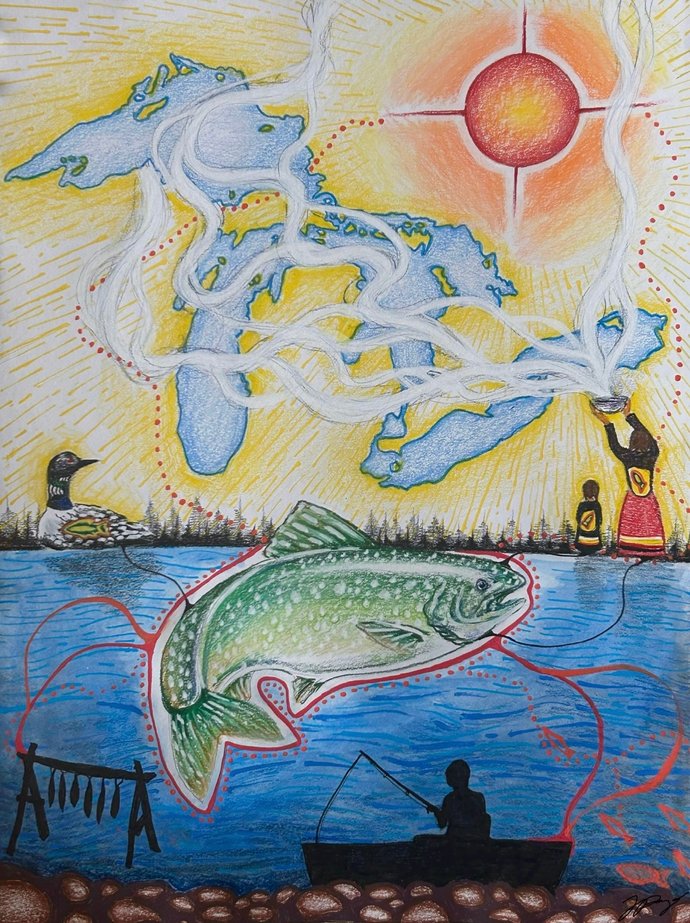
Artist’s statement: This drawing illustrates the relationship between people and fish for sustenance, culture, health, and sovereignty. Sustenance is represented through a fish drying rack and the placement of fish inside the loon and the human beings depicted in the drawing. The purpose of this is to show fish not only as a food source but also to symbolize the spiritual connection and sustenance that comes from consuming fish from your territory. Culture and ceremony are shown through the fisherman and the figures holding a smudge bowl up to the Great Lakes, symbolizing a cleansing of the water bodies. I chose to use spirit lines to connect all of these elements together because spirit is such an integral part of Anishinaabe culture and way of life. These spirit lines work to show how each element in the environment is interconnected and related to one another. The goal of this illustration is to help you reflect on your own understanding of the relationship people have with fish and how consumption advisories can jeopardize this relationship. Everything is interconnected. Contamination in fish is not only an issue of consumption and physical health, but an issue of Indigenous sovereignty on Turtle Island.
~ Jessica Pauze