Out of sight, out of mind is the perfect idiom for microorganisms.
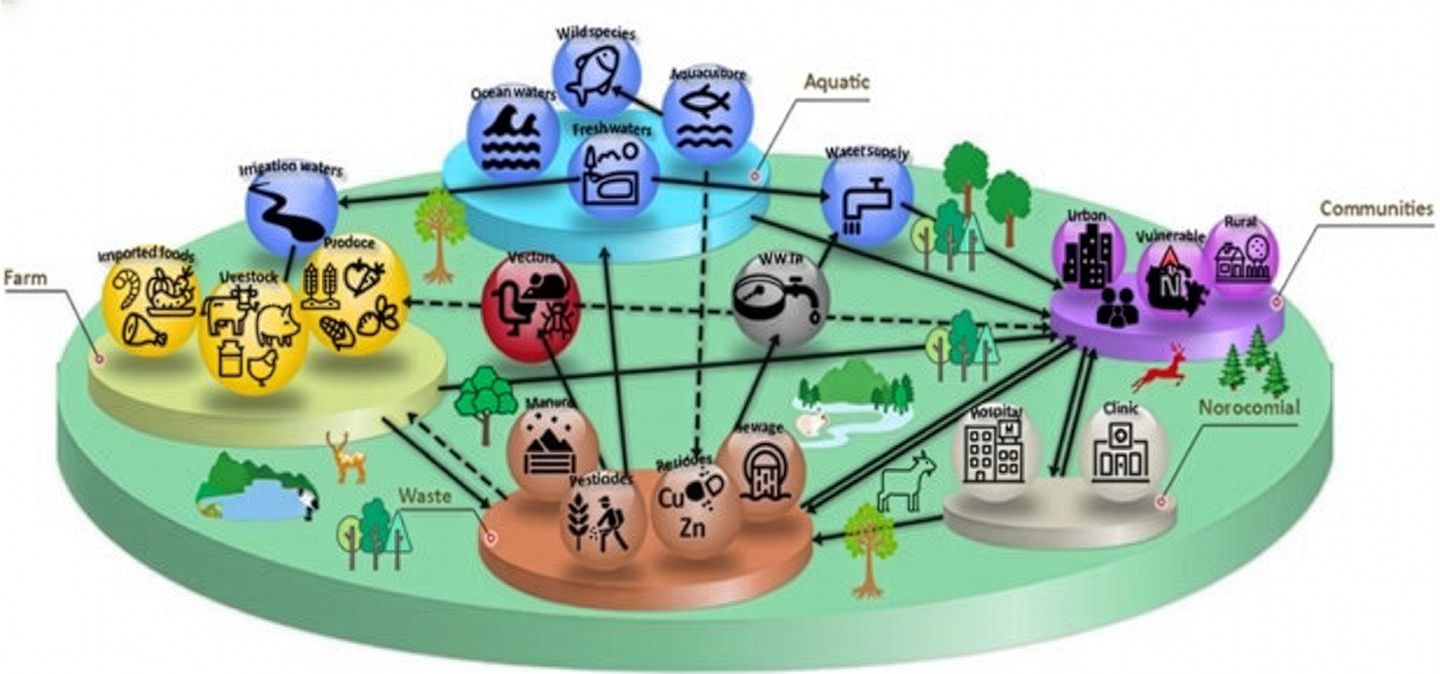
When enjoying the first summer swim in a favorite lake, one does not think of the invisible world of microbes in the surrounding water and sediment. However, the ubiquity of microbes throughout Earth’s biosphere—and our own bodies—is as guaranteed and critical to the functioning of life itself as the rising and setting of the sun. This fact underpins the much touted “One Health” research paradigm, which states that human, animal, and environmental health are all inextricably linked by the material (e.g., water) and organisms that flow within and between these compartments (see figure). Unseen aquatic microbial communities not only shape the natural world by driving global ecological services and complex biogeochemical cycling but are also reservoirs of well-known pathogens and other microorganisms that under specific circumstances opportunistically cause disease in humans or animals.
Of increasing concern is whether, and how, aquatic or environmental microorganisms acquire and maintain resistance to the dwindling suite of effective antimicrobial compounds available to treat them in the event of an infection. Antimicrobial resistance (AMR) is a natural survival function of microorganisms. Yet it can be enhanced when microorganisms share genetic information with one another or are exposed to antimicrobial compounds and a small proportion of resistant organisms survive and proliferate. The threat to human life of untreatable microbial infections is so severe that the World Health Organization declared AMR a “State of Emergency” in 2015. Recent projections estimate 1.95 million global deaths as directly attributed to AMR, with an estimated 4.95 million deaths associated with AMR (Murray et al. 2019). In Canada, the projected AMR-attributed mortality rate for 2050 is 396,000 lives, while healthcare-related costs and impacts to GDP are projected to balloon to CAN$120 billion and CAN$388 billion, respectively (Council of Canadian Academies 2019).
To combat this crisis, it is fundamental to understand the role and impact of environmental AMR on human health. To do so, we must consider areas in which human activities intersect with aquatic systems, such as wastewater effluents and run-off that contains antimicrobials widely used in healthcare, food production, and agriculture, as well as the manufacturing and disposal of these compounds. These discharges carry residues and/or metabolites of antimicrobials that persist in water, soil, and sediment, and potential antibiotic resistant bacteria (ARB) and genes (ARGs) that humans and animals excrete in biological wastes. With elevated levels or more severe types of AMR (above natural baselines) in the environment, the emergence of novel or opportunistic pathogens is possible, and/or selective pressures are produced that alter natural biodiversity, diversity of function, and subsequently broader ecological services (Larsson et al. 2023).
With these troubling scenarios gaining increasing global attention, in 2020 the Government of Canada established the second iteration of a Shared Priority Project on Antimicrobial Resistance through the Genomics Research and Development Initiative (GRDI-AMR2 2024). Under this project umbrella, Canadian federal agencies including Agriculture and Agrifood Canada, Canada Food Inspection Agency, Fisheries and Oceans Canada (DFO), Environment and Climate Change Canada (ECCC), Health Canada, and Public Health Agency of Canada closely collaborate to address the burden, dynamics, and risks of AMR across the Canadian One Health spectrum. In the spirit of One Health, this marks the first-time participation of DFO and ECCC in concerted investigation of AMR, helping to leverage their respective expertise to confirm or assign weight (i.e., risk) and directionality to the proposed vectors of environmental AMR burden and transmission within the One Health “confusogram” pictured above.
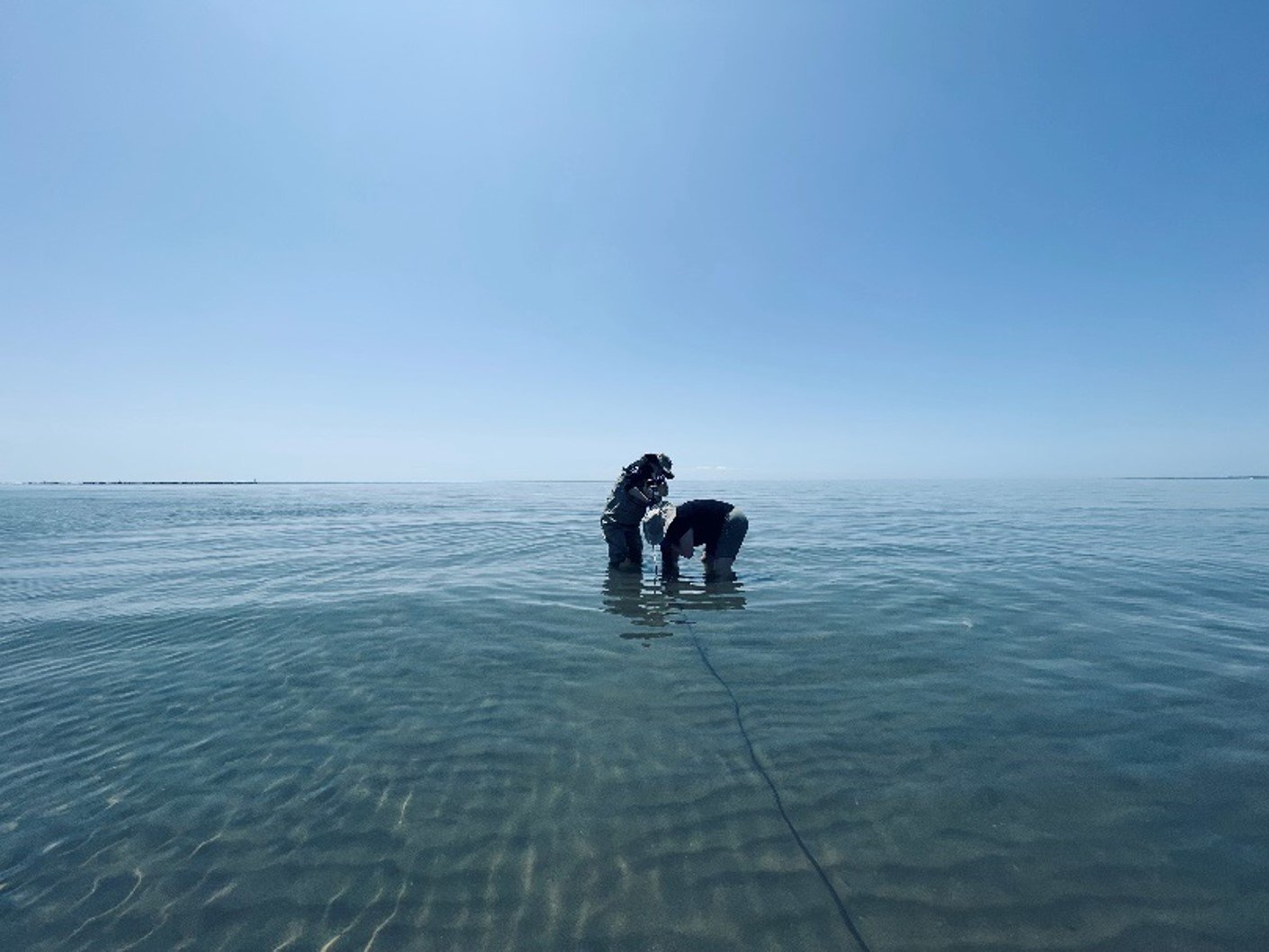
For this project, ECCC has specific focus on priority waterbodies across Canada (encompassing all ecozones), including the Lower Great Lakes, to confirm the background burden of AMR in these environments (i.e., what might be naturally present) and the influence of various contamination sources on driving the abundance and diversity of ARGs (pictured above). While Canada is not a major global producer of antimicrobials or pharmaceuticals, these compounds/metabolites are still detected from wastewater effluents and various manufacturing activities (Kleywegt et al. 2019), with growing evidence showing that recreational waters harbor diverse ARG/ARBs influenced by various anthropogenic inputs (Kraemer et al. 2022). This poses real potential for resistant organisms to colonize the humans and animals that use these waters (Nappier et al. 2020). As the Great Lakes support our society domestically and abroad, these compounds and ARBs/ARGs are free to cross international borders, necessitating a collaborative effort to understand the impact of pollution on AMR transmission risks.
While this work is foundational and will by no means be completed at the end of the five-year project, the intent is to inform the prioritization of specific ARG targets and/or environmental sites for future study, surveillance, and potential mitigation strategies. Engagement with environmental stakeholders who are concerned with the stewardship and safety of Canada’s water resources is recognized as critical to supporting the “One Health” of the Canadian public, animals, and ecosystems. Included in that list of stakeholders are those of us who look forward all year to our first swim or fish of the season, surrounded by the invisible, but powerful, world of microorganisms.