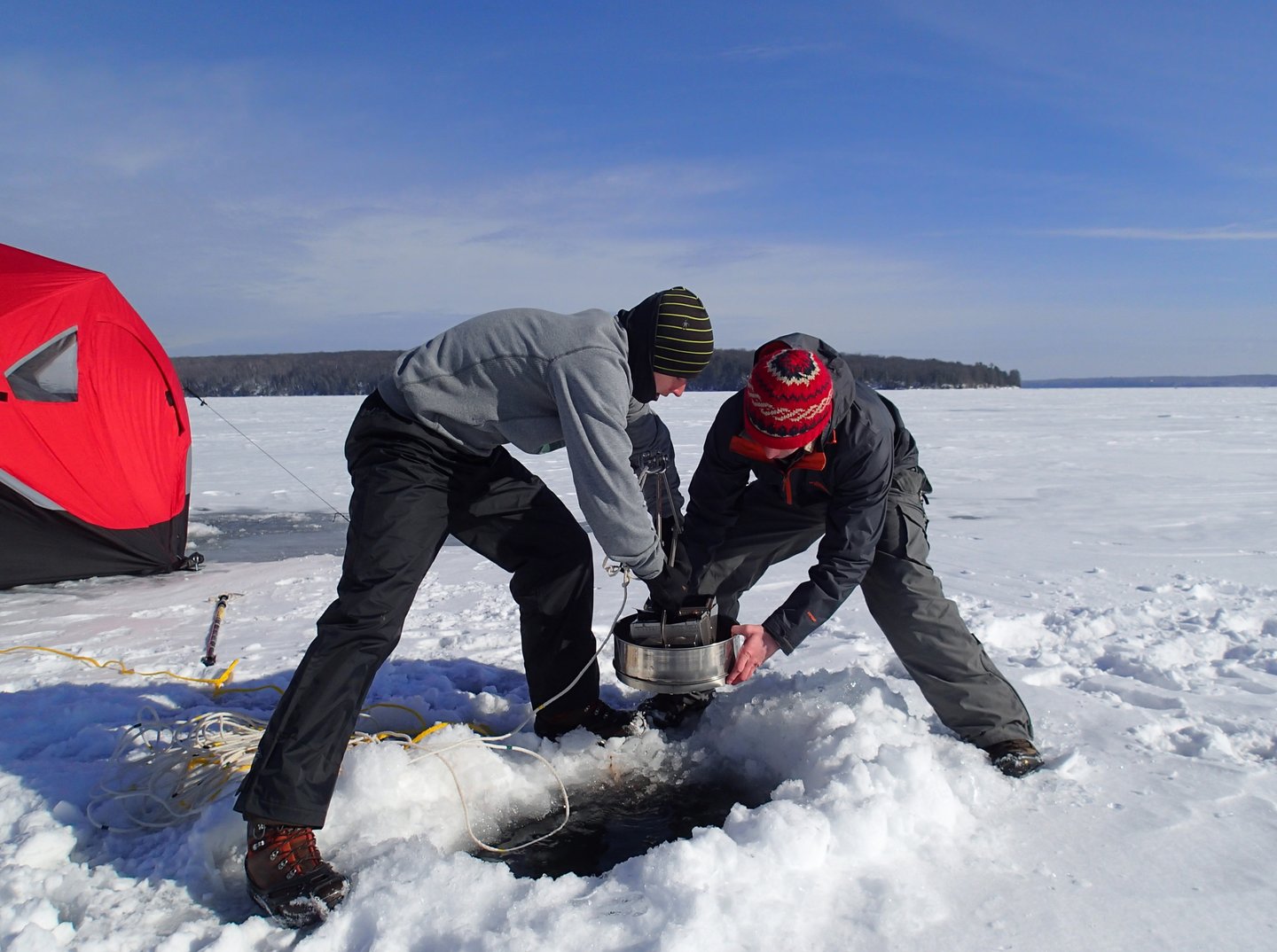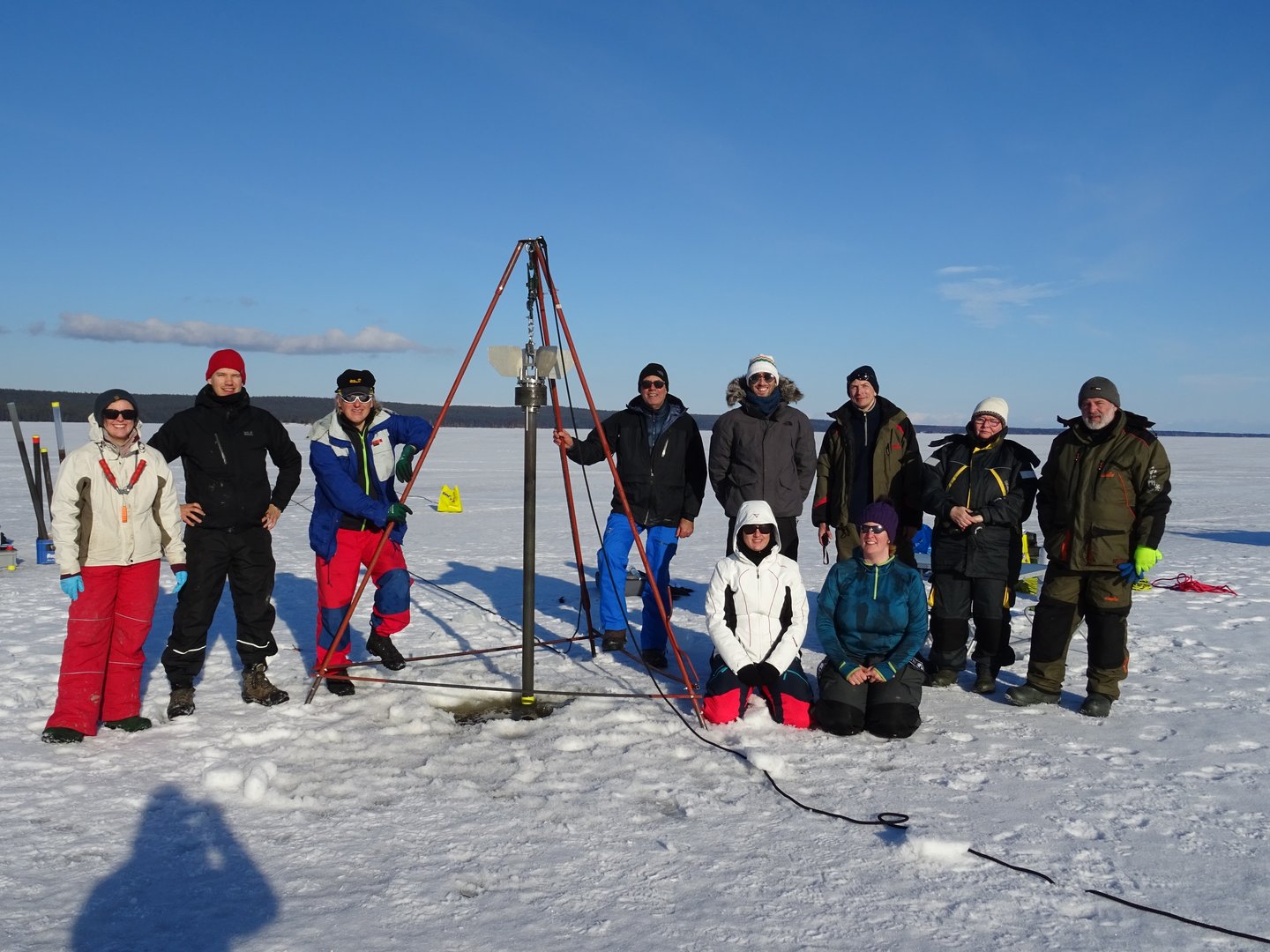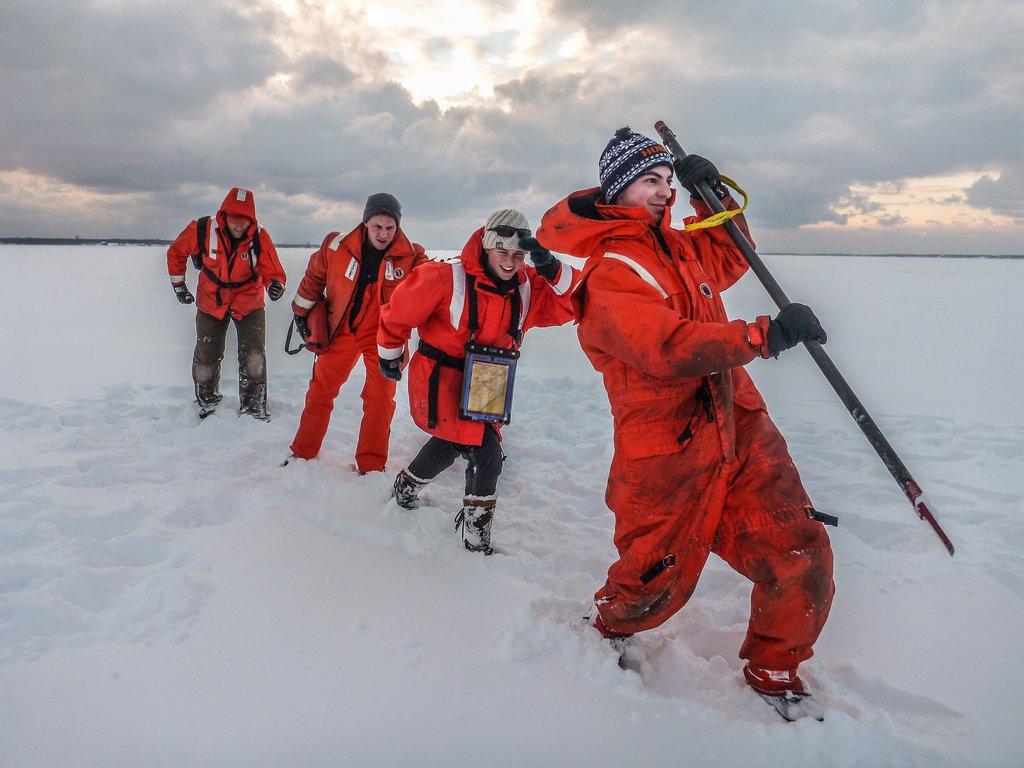
We set micro-mesh gill nets from December 2015 to August 2016 in Grand Traverse Bay and used a remotely operated vehicle to document distributions and diets of benthic fishes. Gill nets captured 1,952 fish of 19 species, with alewife (Alosa pseudohargenus) (29%), rainbow smelt (Osmerus mordax) (24%), and round gobies (Neogobius melanstomous) (17%) most abundant. Alewives migrated to depths of greater than 100 meters during winter and 20 meters during summer. Round gobies migrated to deep water by December, then to less than 20 meters during summer. The largest individuals led the migration.
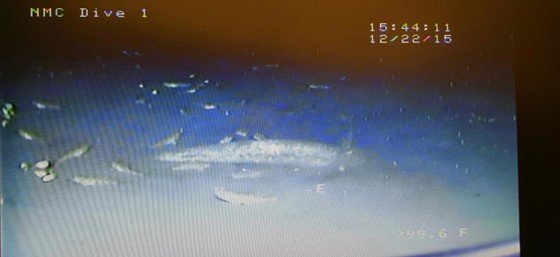
Video showed round gobies composed 88 percent, alewife 6 percent, and deepwater sculpin (Myoxocephalus thompsoni) 7 percent of observations in 70–125 meters and 15, 73, and 12 percent, respectively in 166–191 meters. The proportion of round gobies increased with increasing quagga mussel densities, but maximum densities were observed around objects, such as trees. Many round gobies were found near dead fish, presumably for food and shelter (see photo). One deepwater sculpin guarding a nest was found on March 16, 2021, marking the first time this behavior was observed.
Round goby winter diet was insects, fish, quagga mussels (Dreissenia bugensis), and Mysis. Round gobies did not eat fish eggs or larvae. Predator winter diets included alewives, round gobies, and Coregonus spp. Mysis were most abundant on sand and occurred in schools. Quagga mussel densities were inversely related to depth, and they formed large, dense colonies (druses) in March not seen in December. Through this research, we elucidated a better understanding of the winter distribution and diet of benthic fishes and predators that may be used to monitor fish abundance and year-class strength.