Lake Erie faces an onslaught of stressors including climate change, eutrophication, invasive species, and harmful algal blooms. Two dissolved gases, oxygen (O2) and carbon dioxide (pCO2), can act as tracers of the past (e.g., temperature, wind, metabolic history), influencers of the present (e.g., fisheries and harmful algal bloom impacts), and indicators of the future (e.g., improve modelling of lake processes and climate). Despite the importance of these gases, large data gaps exist throughout the year. Measurements of O2 and pCO2 are particularly limited in the winter, when ice cover and harsh conditions hinder sampling efforts.
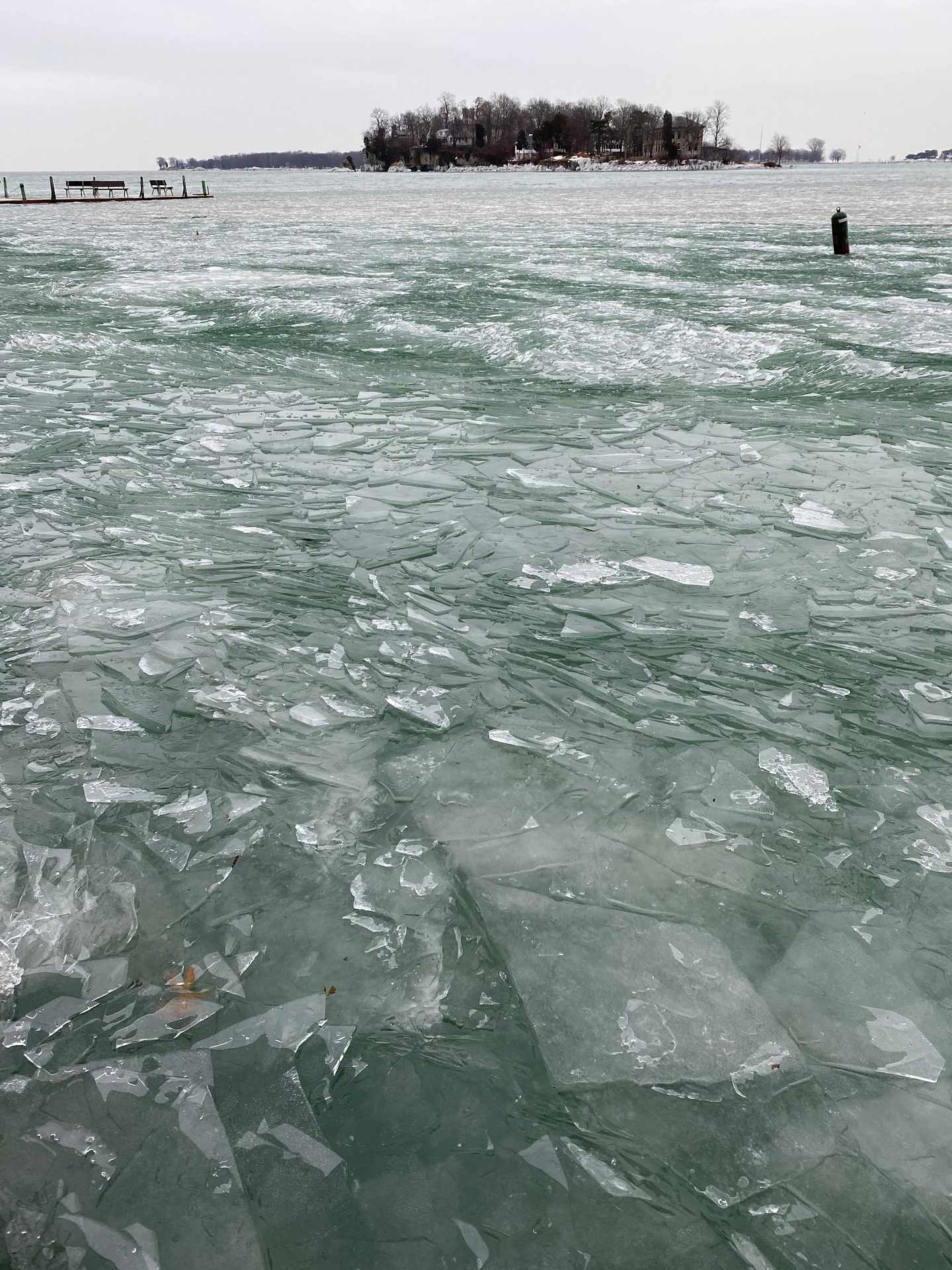
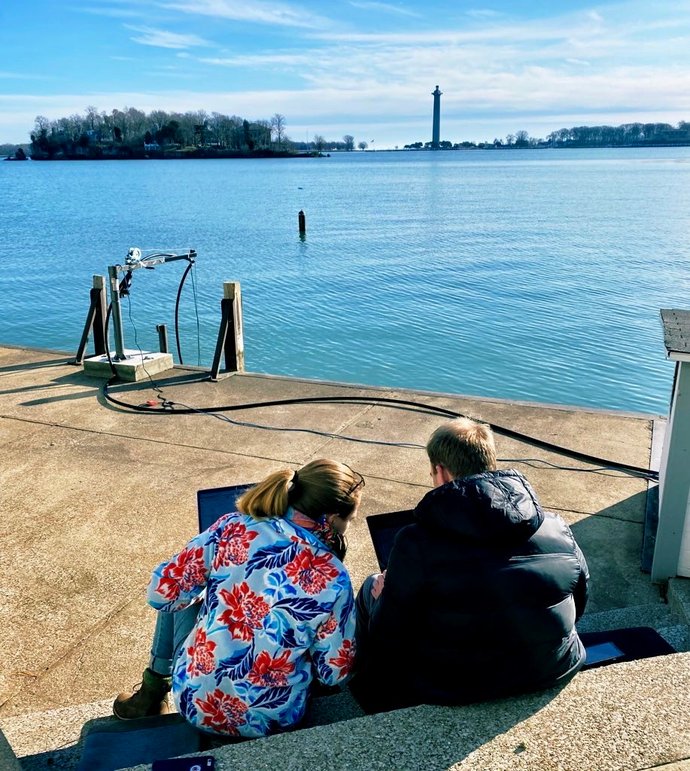
To help remedy this, a team from Oberlin College headed to South Bass Island for the 2020 winter term. A pump off the dock at Stone Laboratory continuously supplied flow-through water for sonde measurements and discrete sampling of a suite of biogeochemical parameters including pH and alkalinity. In addition, we assessed the balance of photosynthesis and respiration of the water column using an Equilibrator Inlet Mass Spectrometer, which continuously measures the water’s oxygen-argon ratio, or biologically driven oxygen signal.
During January, we derived pCO2 values ranging from 380-525 μatm, with this lake region on average behaving as a source of CO2 to the atmosphere at this time. As the season progressed, we observed a shift to net autotrophic conditions with daily variability tied to storm events and fleeting ice. Our study season was a particularly low ice year, so may be reflective of more common conditions in the future. Work is ongoing to amass winter O2 and pCO2 data from more locations and years and connect winter processes to spring and summer dynamics and blooms.