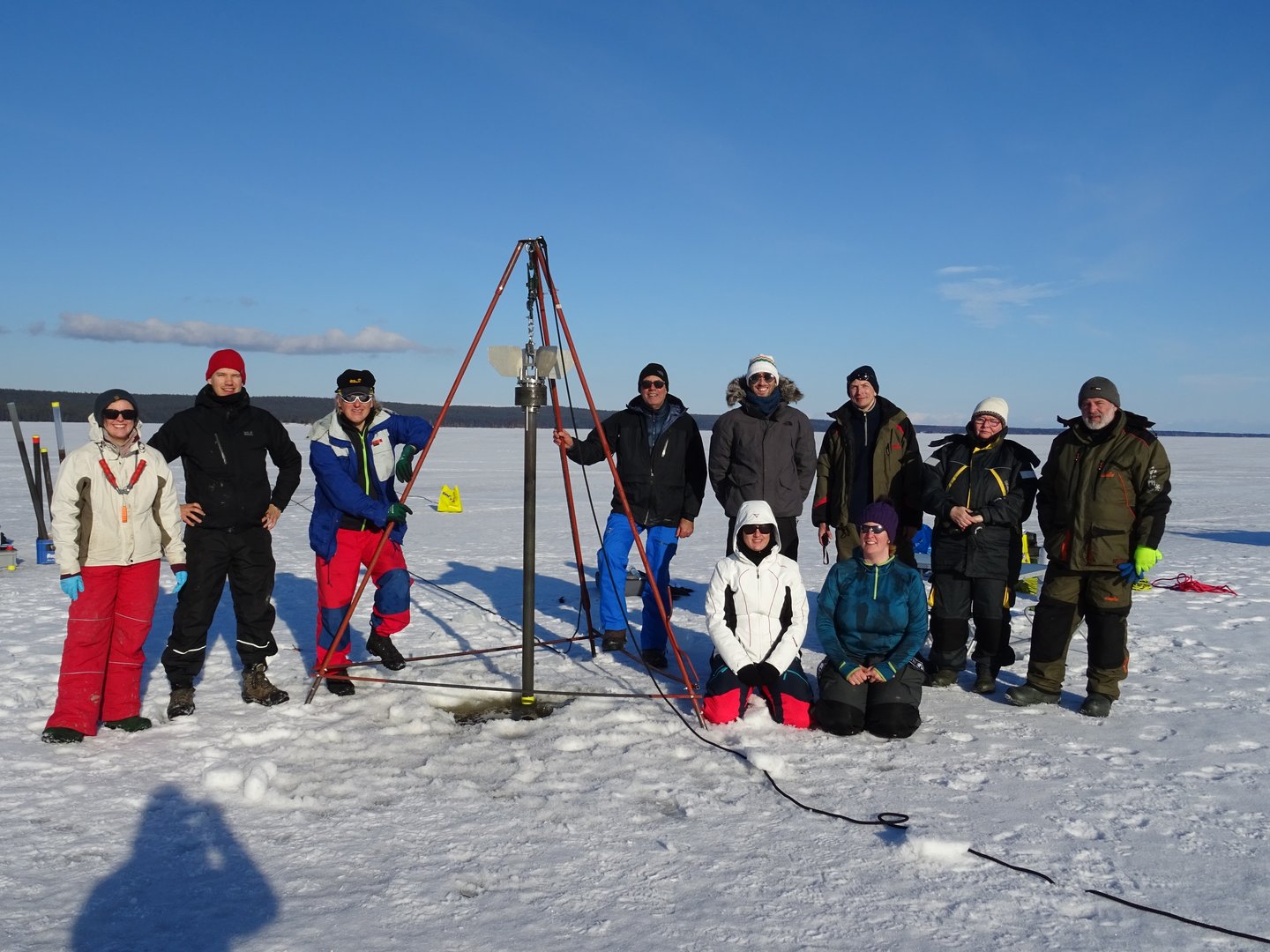
Thanks to funding from the FEEL Foundation for Water Research in Lake Geneva, we had the unique opportunity to work on the ice of Lake Onego, the second largest lake in Europe. Our Russian-Swiss project investigated physical and biogeochemical dynamics under the ice. The diverse research topics consisted of water physics, biology, chemistry, lake ecosystem, carbon cycling, paleolimnology, remote sensing, and climate change. Seven subprojects were conducted by 75 specialists from 12 different research institutions in Russia, Switzerland, France, Germany, and Sweden. The opportunity to collaborate with such a diversity of disciplines, cultures, and individuals made for an amazing experience.
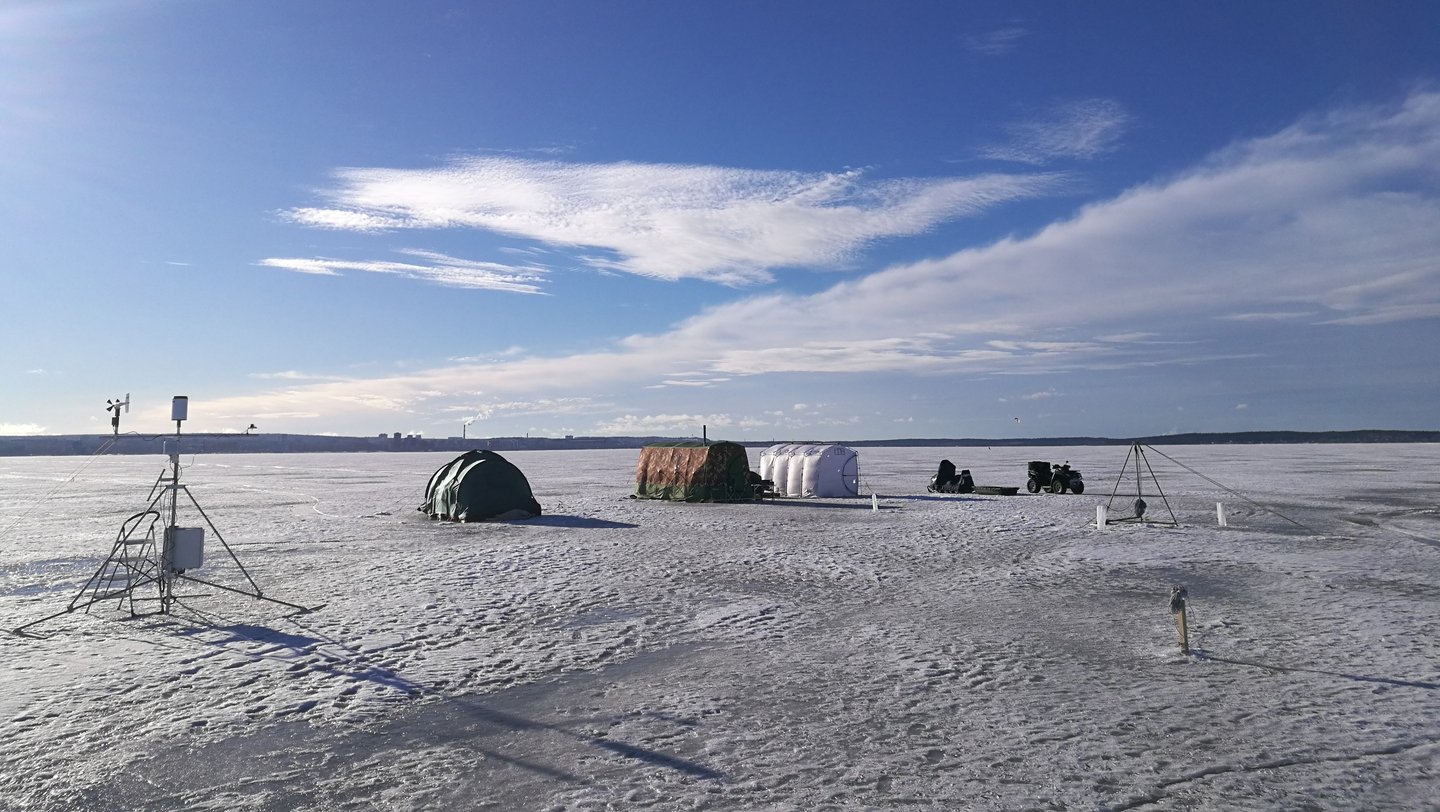
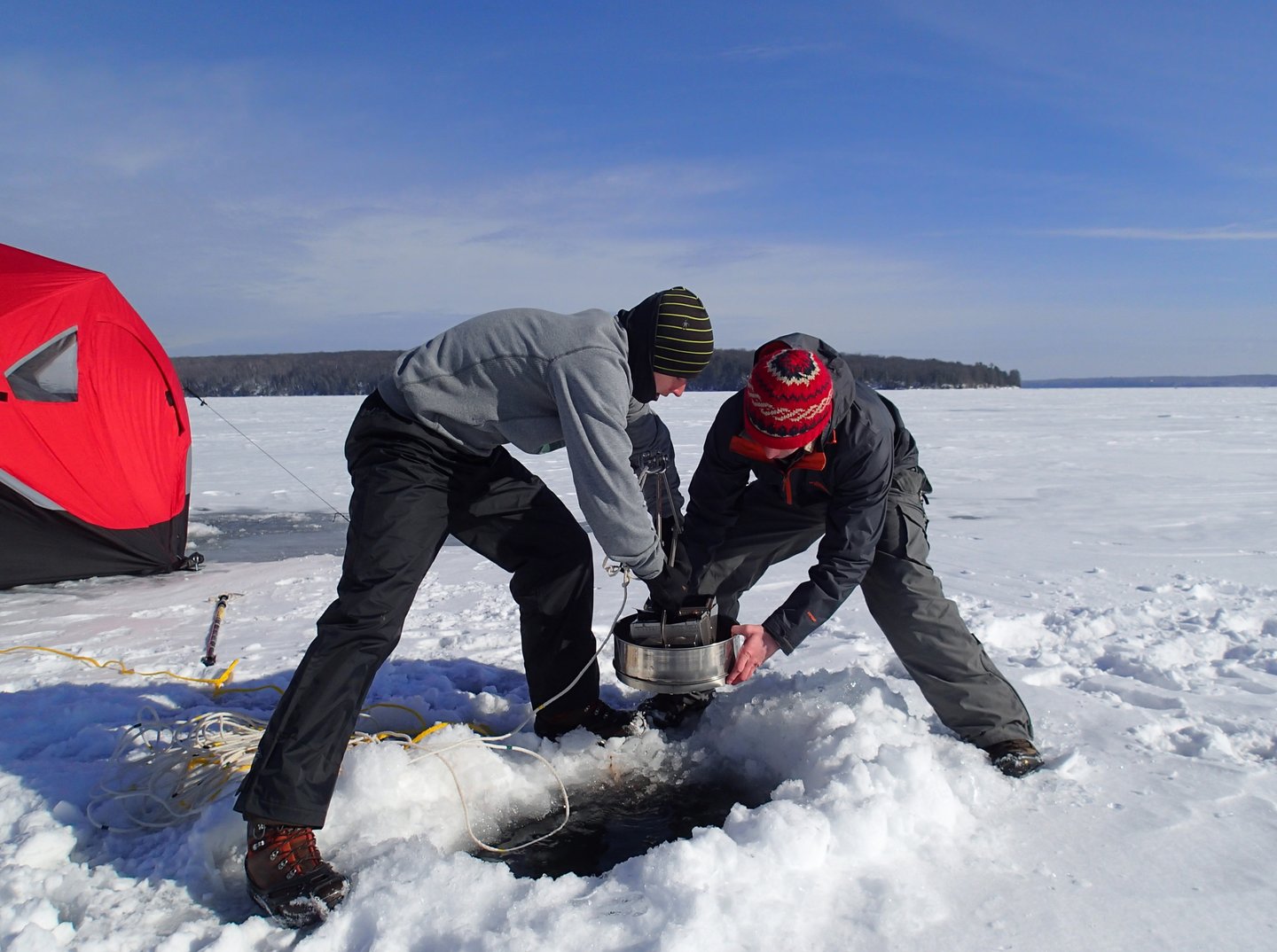
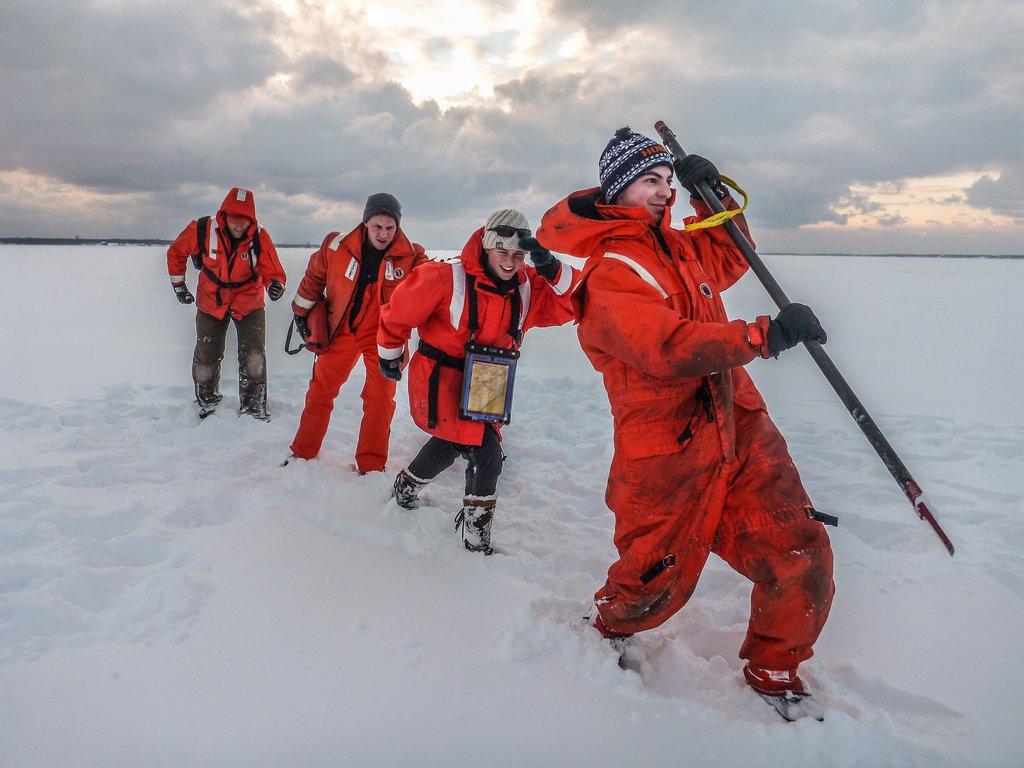
The Center of Limnology at the École Polytechnique Fédérale de Lausanne (EPFL) and the Northern Water Problems Institute (NWPI) organized the joint field expeditions. In March 2015, 2016, and 2017, the NWPI installed an ice camp for two weeks in the middle of Petrozavodsk Bay, which measures 7 by 15 kilometers. The camp was composed of one to two tents warmed by a stove, one tent to store the material, and one tent for the toilets. A rotating team ensured a 24-hour presence on the ice for regular measurements. Around the camp, different moorings and a meteorological station were deployed from the ice. The scientists came onto the ice via hovercraft during the day to take their samples or profiles and to carry out experiments. The researchers also benefited from close access to NWPI laboratories. While the main camp was the major study site, we also investigated different sites within the bay and in the more central part of the lake. Thanks to the local experience from NWPI, the logistics, safety, and the work on the ice were a success.
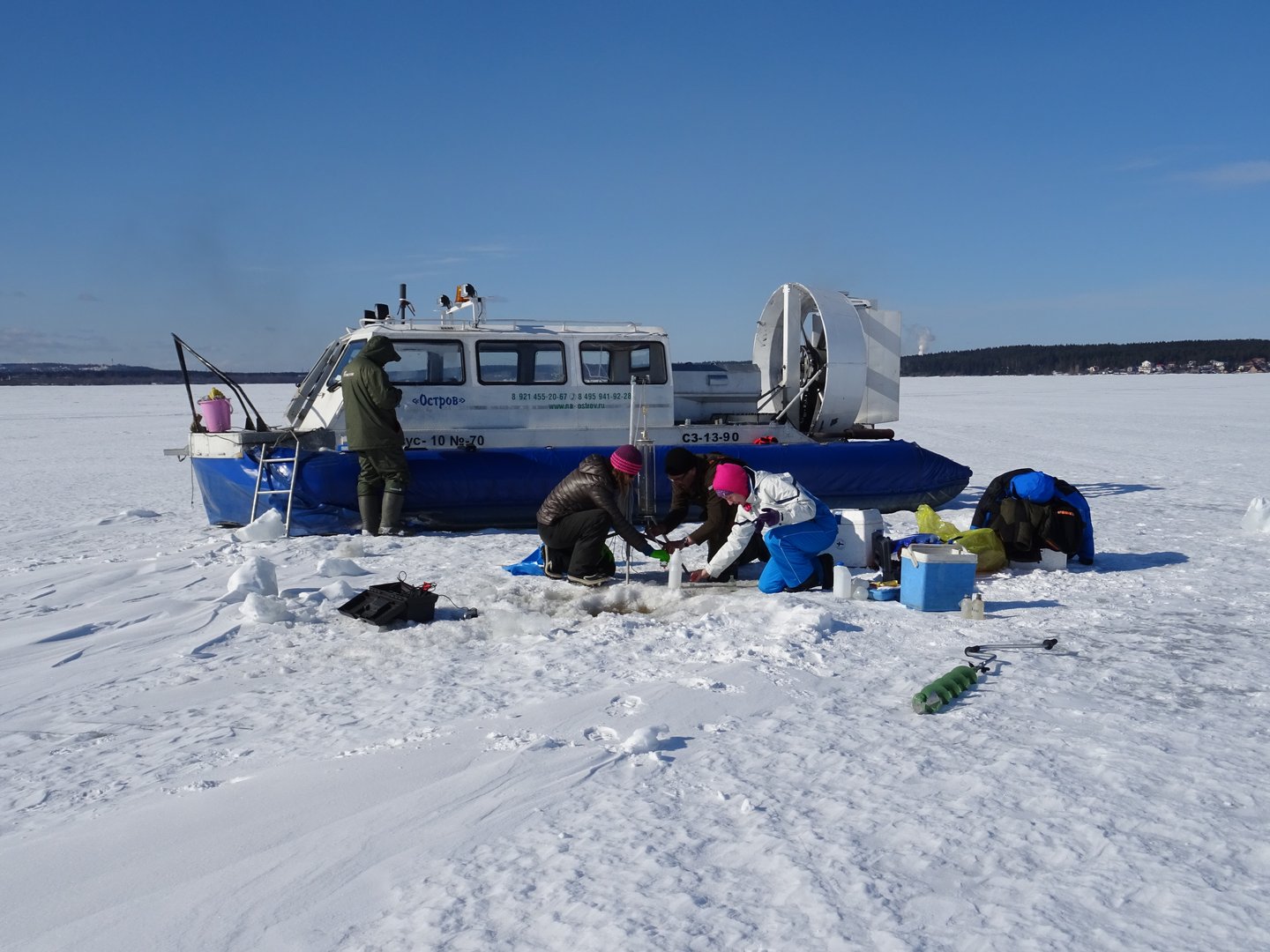
During the project, we tried to promote as many interdisciplinary interactions as possible between all scientists. For this, we had regular joint meetings by videoconference between Switzerland and Russia, as well as intensive exchanges during two-days retreats in Switzerland. The highlights were the fieldworks with their amazing collaborative atmosphere: researchers were helping each other, discussing their results, learning from other disciplines, and having fun together. Most of the European researchers worked for the first time on the ice. Thus, they greatly benefited from the Russian experience, techniques, and know-how. Some scientists even started to investigate frozen lakes back home, and others continued to build on the knowledge acquired on the under-ice convections in Lake Onego. On a personal level, we also got to know new scientists, which sometimes led to further collaborations that persisted beyond this project. Overall, this multidisciplinary project had a great collaborative atmosphere that generated positive outcomes for this project and, hopefully, for the future.
One of the key lessons that we learned is that the conditions below the ice were highly dependent on the quality of the ice (with or without snow cover), the weather conditions, and the hydrology of the large river entering the bay. We therefore observed large variabilities between the three investigated years. This project also managed to characterize in detail under-ice convections and their implications for ecosystem development. We could also evaluate the impacts of the ice-covered period on ecosystem functioning and carbon emissions after ice break-up. Researchers presented this project during nine talks in a session on winter limnology at the 2018 ELLS-IAGLR conference in Evian. For the detailed scientific outcomes, please refer to the special issue Life under ice in Lake Onego (Russia) – an interdisciplinary winter limnology study in Inland Waters (2019).