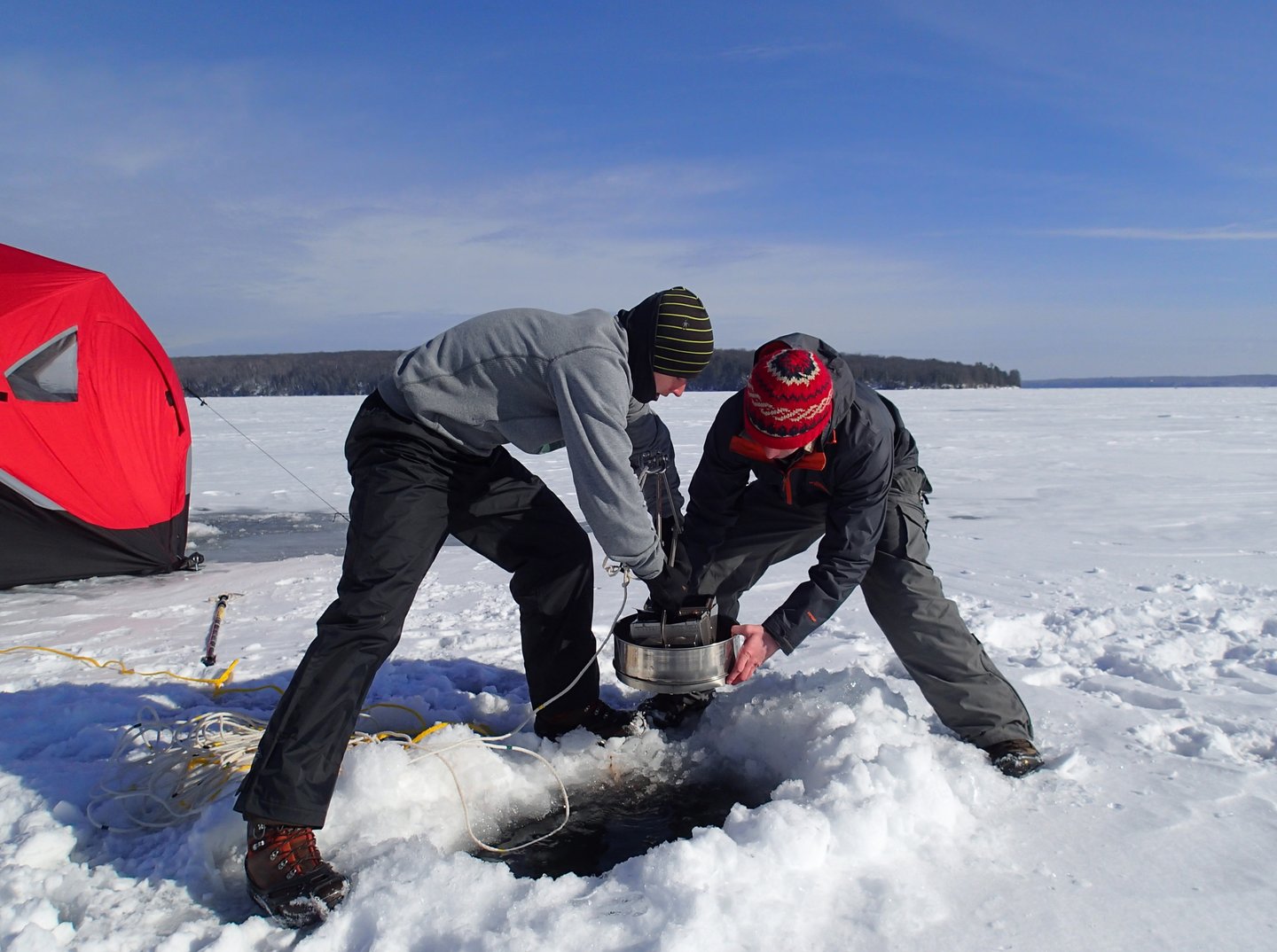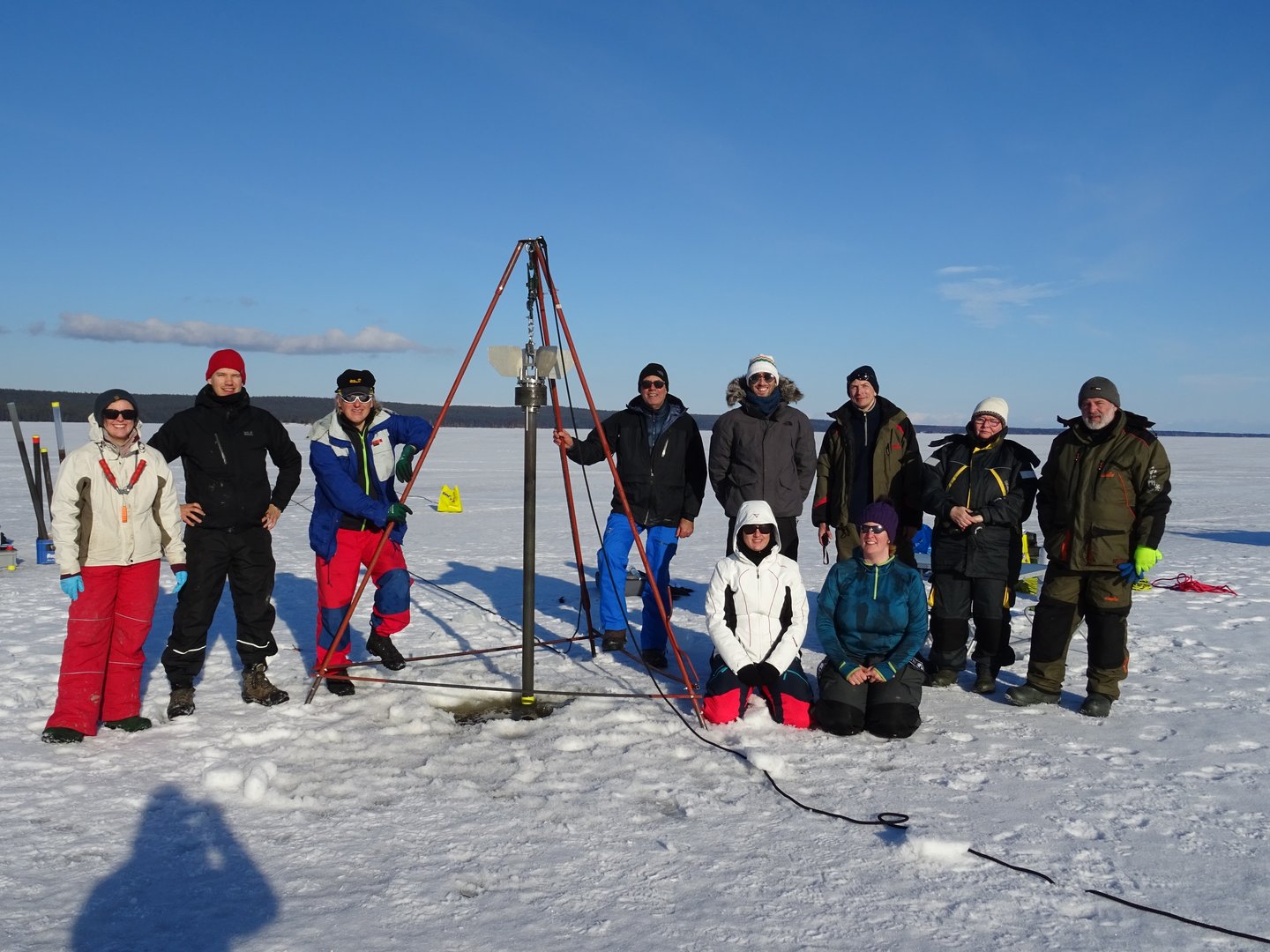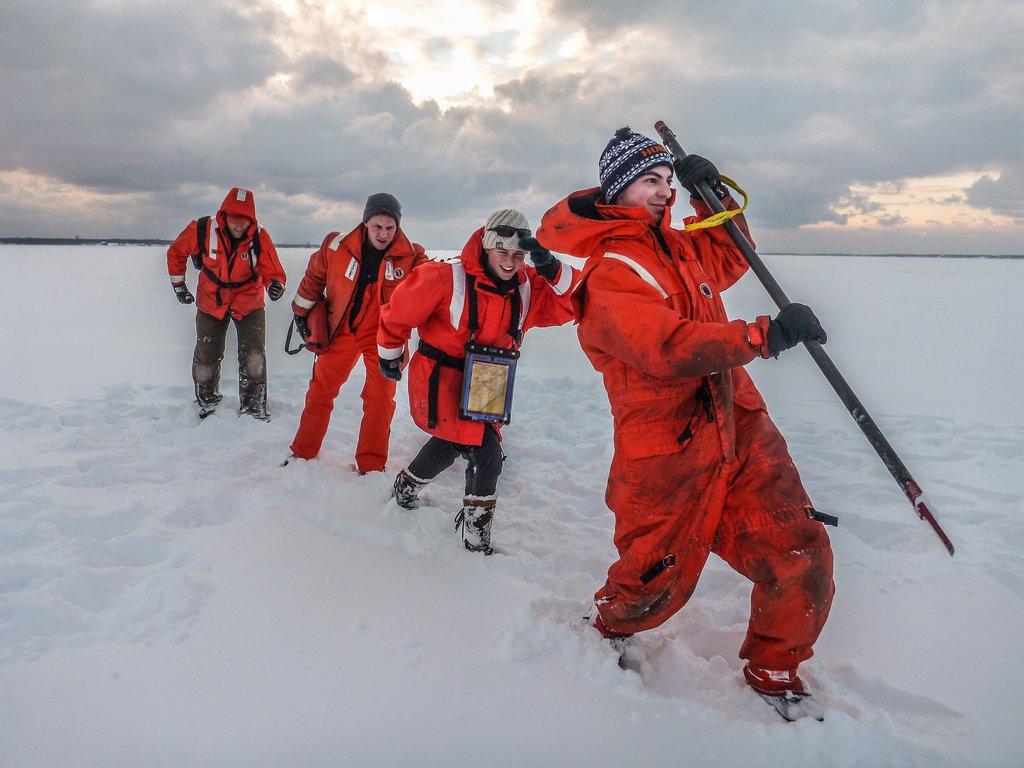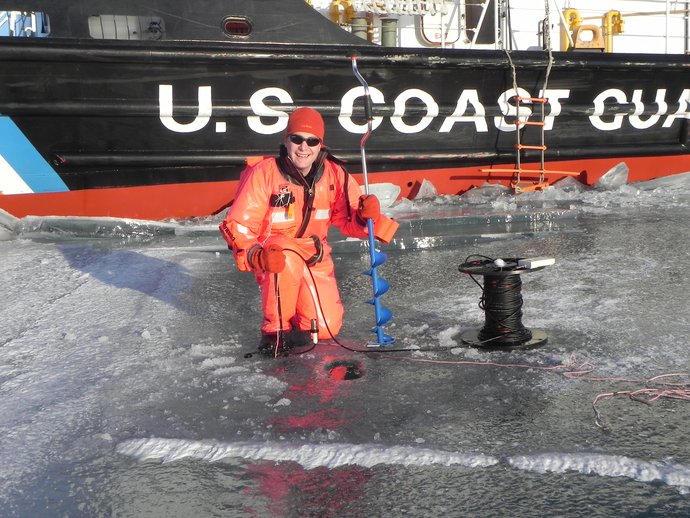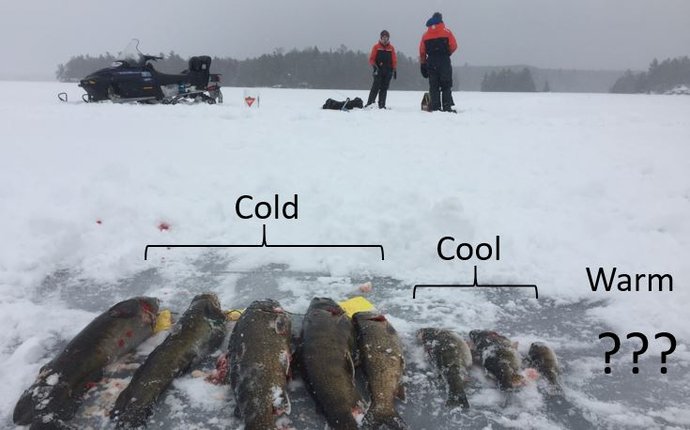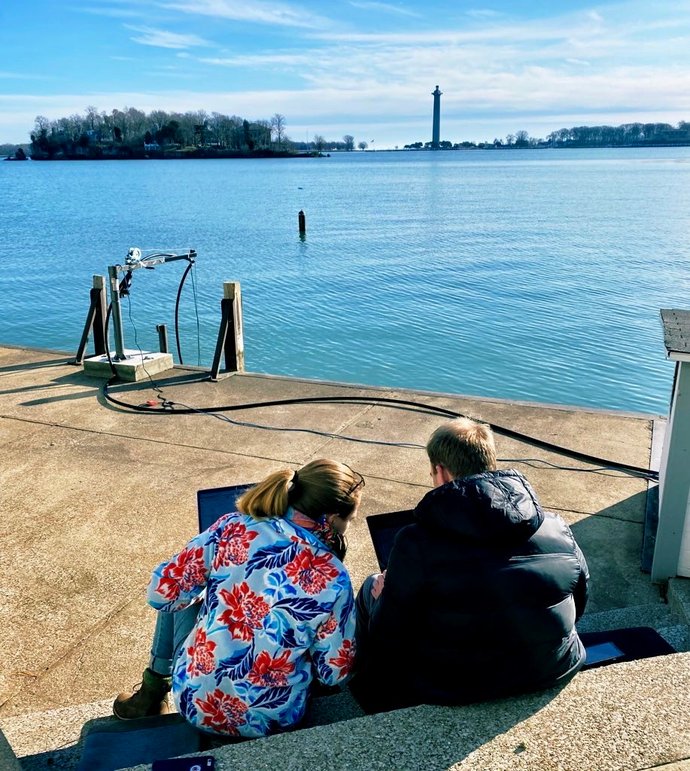
Winter is the least well-studied season in natural systems. Accordingly, the patterns and processes of ecosystem function during the cold, frozen months are poorly understood. The nature of temperate lakes, being seasonally frozen with unstable ice cover, makes them logistically challenging and potentially dangerous to study in winter, and winter fieldwork can be demanding. As Ted Ozersky, lead of the recently formed Great Lakes Winter Network (GLWiN; see page 6) puts it, “Many limnologists, like most people, would rather spend a winter’s day curled up next to the fire with a good book and a better Scotch than soaked and cold, standing in the middle of some frozen lake.” Despite this, many researchers have contributed to a growing body of knowledge on the physics, biogeochemistry, and biology of frozen lakes, as attested by articles in this issue. New initiatives like GLWiN promise to help fill in the many remaining knowledge gaps.
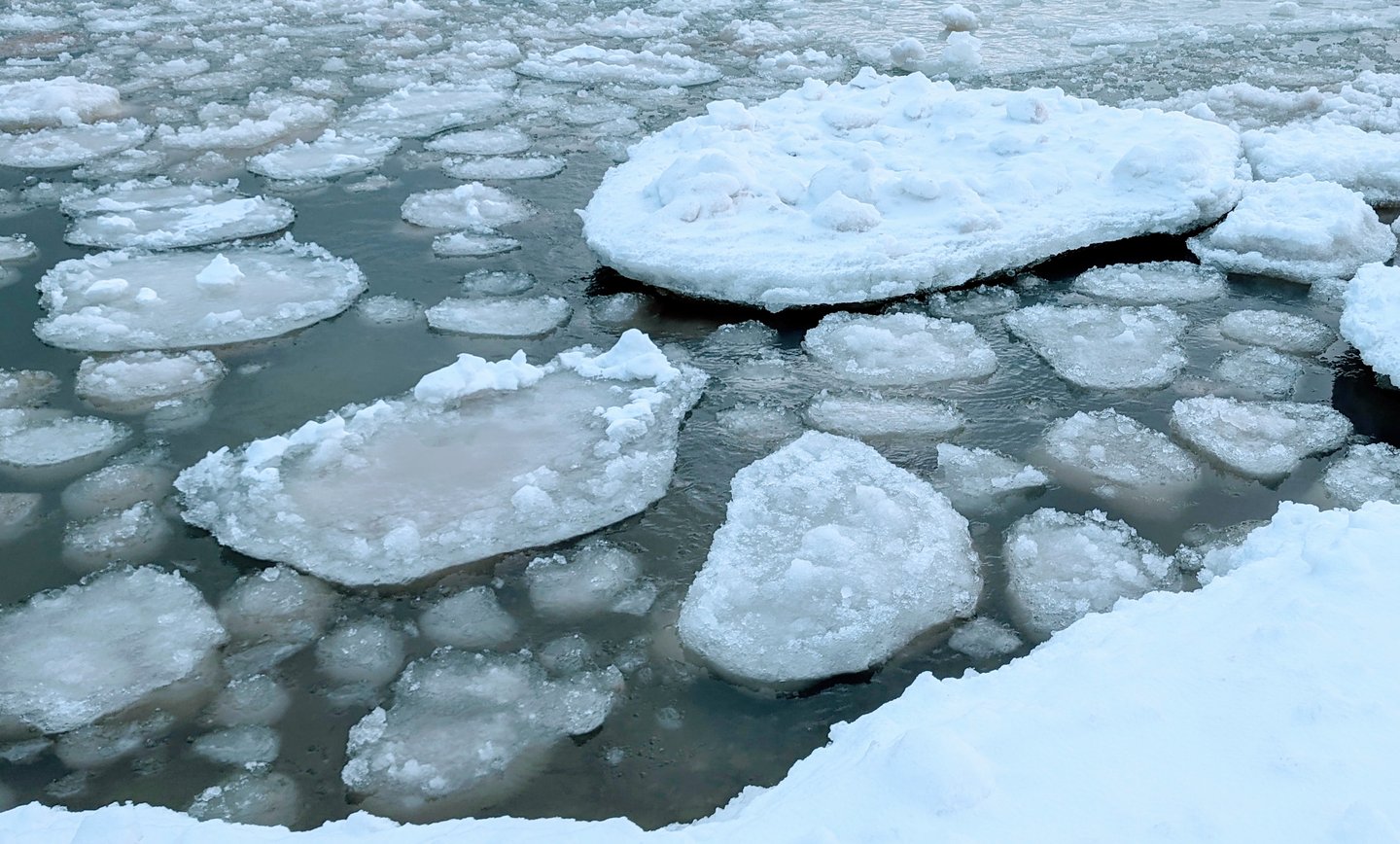
As in many systems, the characteristics of winter are changing in the Great Lakes. Despite their large size, they are among the most rapidly warming lakes on the planet, with implications for the extent, thickness, and duration of seasonal ice cover. Changing ice cover is seen as a key variable that regulates mixing regimes, underwater light climates, and biotic responses. However, predicting the effects of seasonal ice loss and associated changes is complicated by the relative paucity of data generated during winter. The Great Lakes are not simply scaled-up versions of smaller lakes, and winter physical processes are distinct and not well-characterized. For instance, the dynamics of ice formation on large lakes can be remarkably sensitive to meteorological stressors. Strong wind mixing associated with autumn and winter gales can decompose surface layers of near 0ºC water, bringing warmer water from depth and delaying ice formation. As such, ice formation in large lakes requires a much deeper portion of the water column to be near 0ºC than in their smaller counterparts. Complex interactions among wind-driven mixing, precipitation, and water column characteristics make ice formation in the Great Lakes spatially and temporally variable, and ice drift further contributes to the patchiness of ice-cover patterns on the lakes.
When and where the surface of the Great Lakes does freeze, ice cover increases albedo, or the reflectiveness of the surface, slows radiative warming and evaporative cooling, and prevents wind mixing. These conditions dampen nearshore resuspension events that contribute to water column nutrient levels and transport sediments to deep zones of the lake. The presence of ice also allows for the development of weak, inverted thermal stratification. This, like summer stratification, influences the distribution and availability of nutrients and other materials in the water column. However, too few studies have been conducted to allow for generalizations across the system.
Differences in snow depth, as well as ice thickness, color, and transparency, influence the intensity and spectral signature of underwater light. Several recent studies have shown that under-ice assemblages can be vibrant and dynamic, and they likely represent distinct entities rather than remnants of open-water communities. The Great Lakes are no exception to this trend. In high-ice years, sympagic (ice-associated) diatoms abound, forming large blooms that can fuel late-winter / early-spring pelagic food webs. Alternatively, sinking of these blooms is responsible for substantial export of organic material to the sediments, where they may play an important role in summer geochemistry. While the rates of nutrient and carbon assimilation under ice are lower than in summer, they are not negligible, and contribute to longer-lived repositories of materials (e.g., sediments, fisheries, etc.).
The relative importance of winter processes to overall Great Lakes ecosystem function, however, is almost completely unexplored. The Laurentian Great Lakes represent approximately one-fifth of the planet’s surface freshwater, and as temperate, dimictic lakes, have been frozen several months per year for much of their existence. Our ability to predict how this important resource will respond to ongoing climate change necessitates better understanding of how winter processes contribute to year-round dynamics. Researchers who are interested in winter limnology point out the urgent need for these studies (see page 11 for a call to prioritize and coordinate winter research). Ice metrics are monotonically declining, and we run the risk of no longer having lake ice to study before we truly understand its importance.