Over the past 20 years, or approximately one lake sturgeon generation, researchers from Michigan State University (MSU) and the Michigan Department of Natural Resources (DNR) have studied lake sturgeon reproduction, physiology, behavior, and genetics. Work has largely focused on understanding factors affecting recruitment in the Black Lake population in Cheboygan County, Michigan. Research, restoration hatchery production, and outreach and educational programs have been conducted in cooperation with stakeholder groups, especially Sturgeon For Tomorrow, and the hydroelectric industry (Tower Kleber Limited Partnership).
A survey conducted in 1997 showed the population of lake sturgeon in Black Lake had decreased by 66% over several decades. This alarming decline triggered statewide efforts to restore lake sturgeon in Black Lake. Collaborative research led by MSU began in 2003. Since then, researchers have secured 23 grants totaling about $4.8 million and resulting in 64 publications. Seven M.S. and six Ph.D. students and over 100 hourly seasonal technical staff have been trained over the period.
Lake sturgeon exhibit a classic Type III mortality function whereby high levels of mortality are realized at the egg, free embryo, and larval stages (see figure). A portion of the research has focused on reproductive responses of adults to environmental factors that affect mortality during early life stages. Adults experience strong pressure to time and locate reproduction to maximize the probability of offspring survival, and reproductive decisions are tied to cues in the environment (e.g., temperature, discharge, day length). The consequences of reproductive decisions are particularly important for species with delayed sexual maturity, like lake sturgeon, as these species are also most susceptible to rapid environmental change because of long generation times.
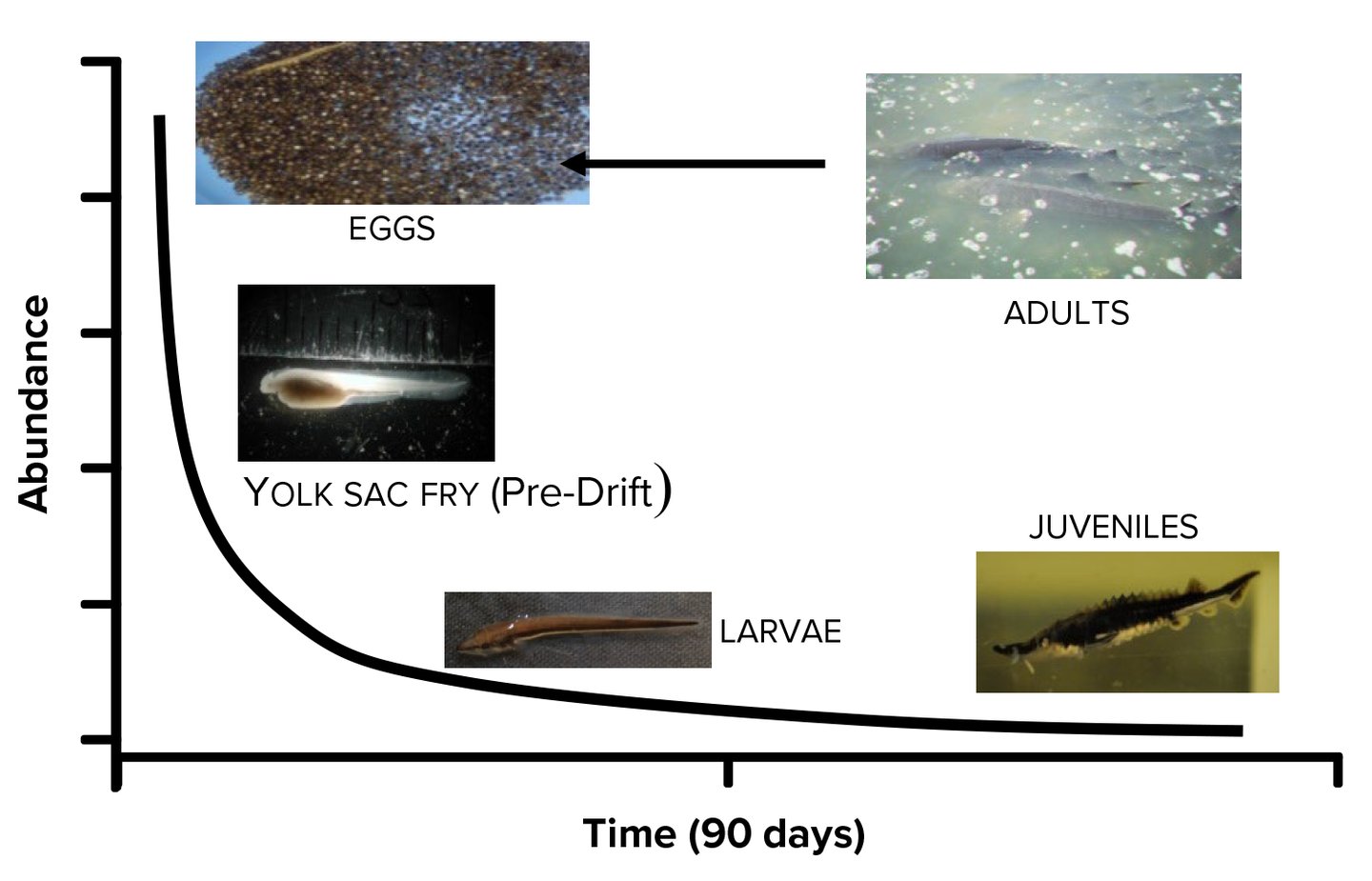
The research is unique in that we integrate molecular genetic assays with field and experimental studies. Genetic determination of parentage allows estimations of relative reproductive success of males and females. Next generation sequencing of predator stomach contents allows estimation of dietary composition and levels of larval lake sturgeon mortality. We have adapted molecular assays to determine lake sturgeon sex. We have developed analyses of behavioral and physiological responses to stress. In addition, to explain the variability in phenotypic traits, we have developed quantitative genetic analyses to determine the proportional influence of genetics and the environment.
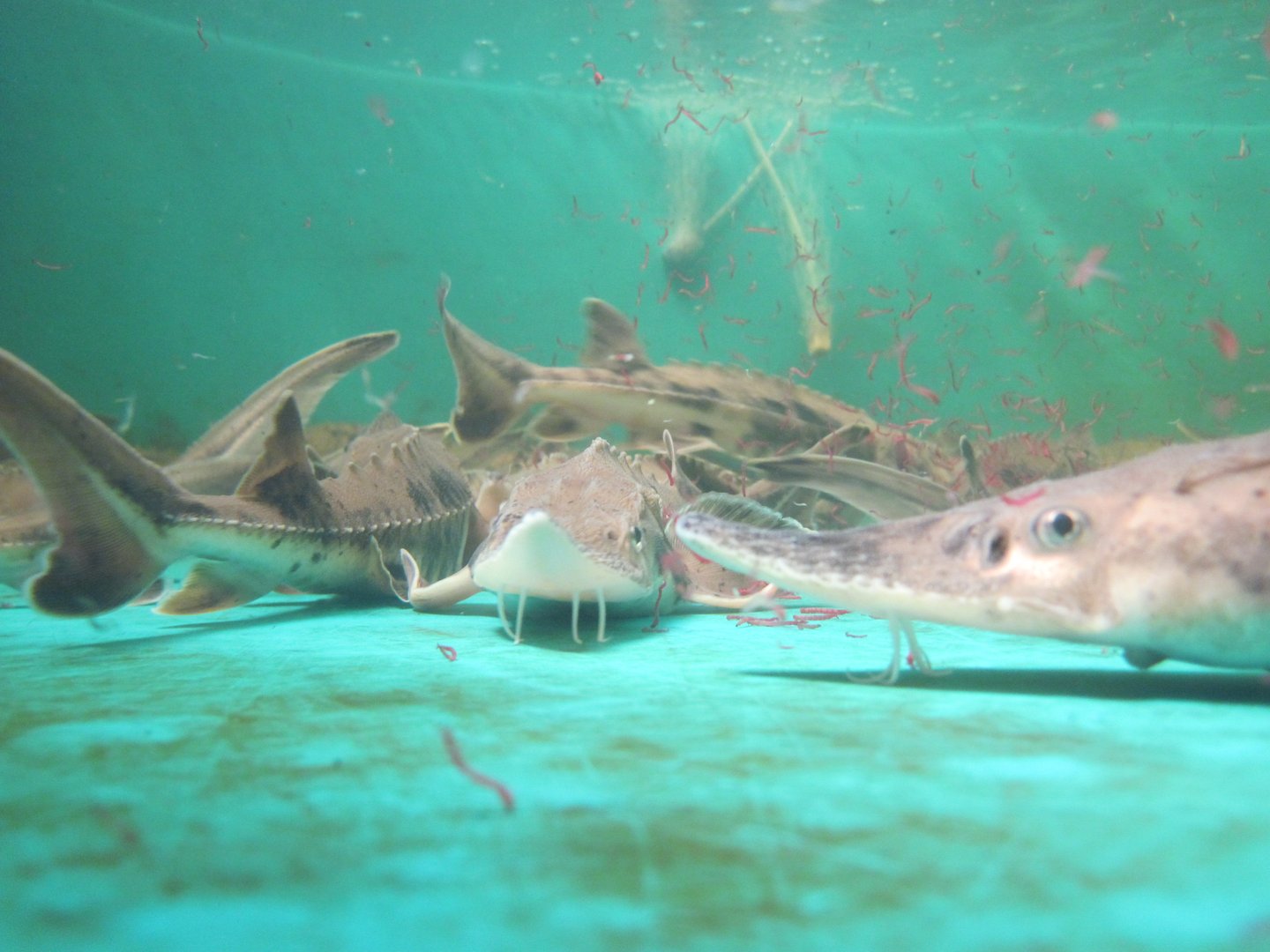
Another major emphasis of work at the site is production of lake sturgeon juveniles for restoration stocking into the Cheboygan and Saginaw river systems. Each year, 1,500 juveniles are produced and 500 stocked into Mullett and Black lakes and across four tributaries to the Saginaw River. Additional fish are provided for rearing by a tribal hatchery for release into Burt Lake.
The Black River hatchery is open for public tours, the largest of which are held in early May during the spawning season and in mid-August when hatchery juveniles are released. We generally have around 1,000 visitors per year. Background about our 20-year anniversary can be found via this short DNR video. Learn more about our outreach, K-12 education, and community science initiative and the Black Lake project.