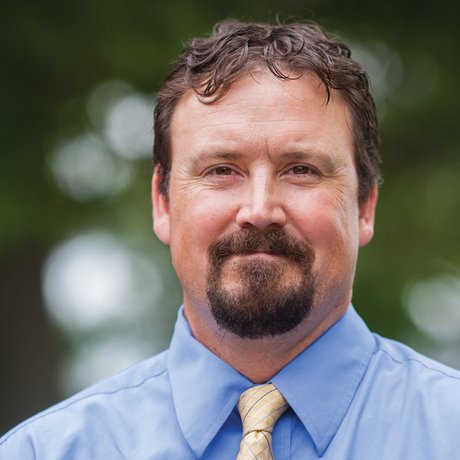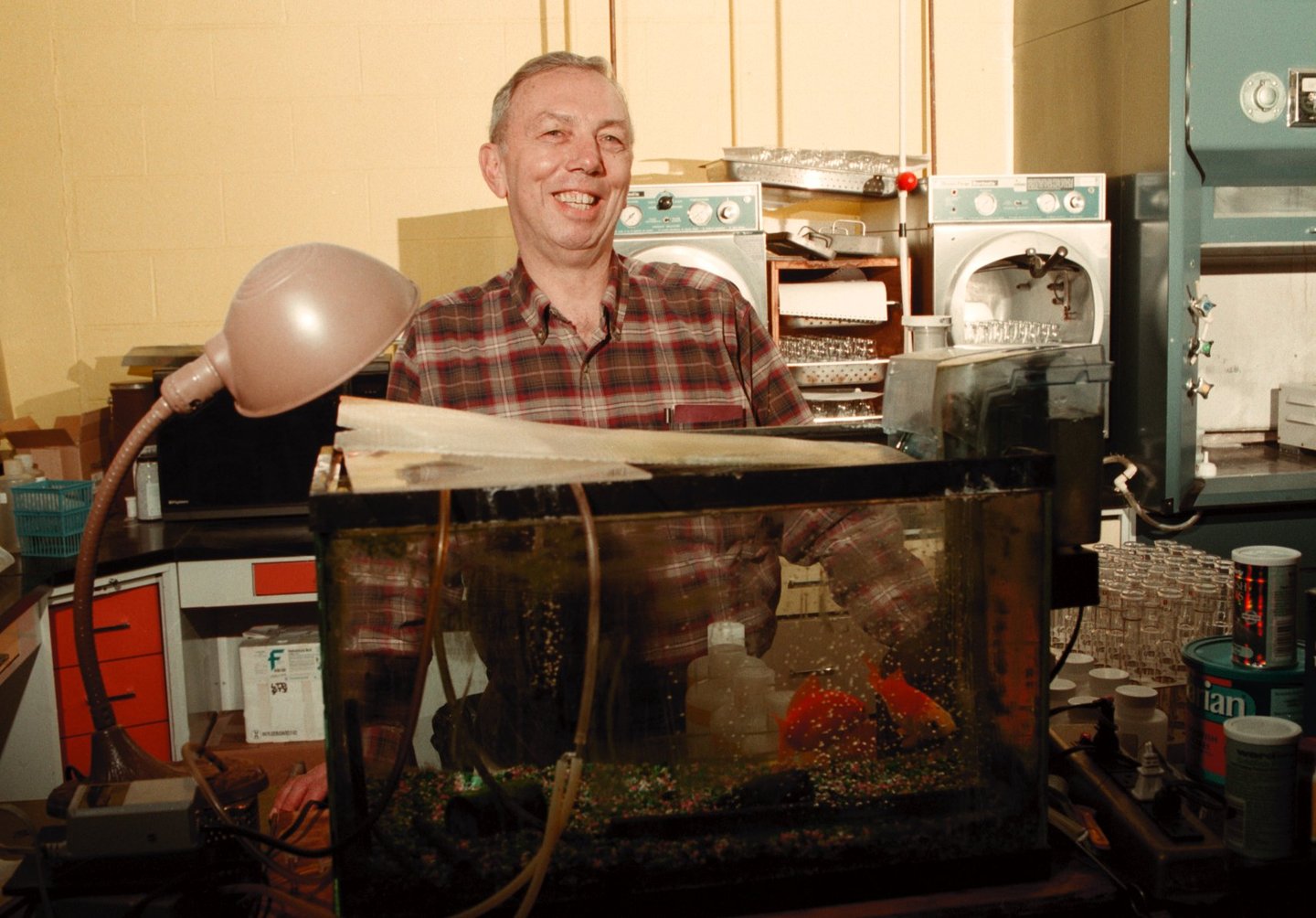
IAGLR has lost a great friend in David Baker, who died of pneumonia on April 16 at age 84. The founder of Heidelberg University’s renowned National Center for Water Quality Research, Baker was aptly described by University of Toledo Lake Erie Center Director Tom Bridgeman as the “father of tributary monitoring.”
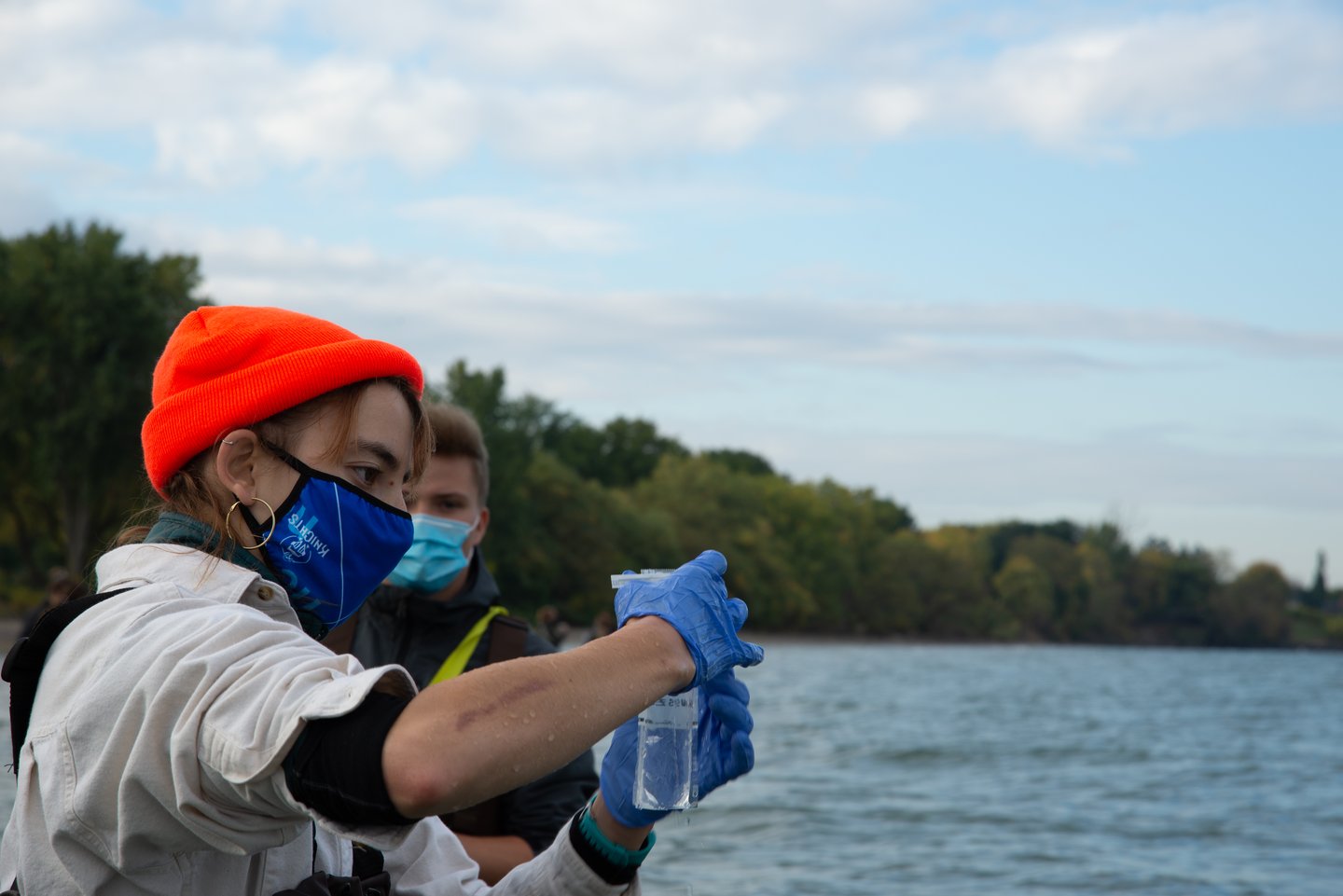
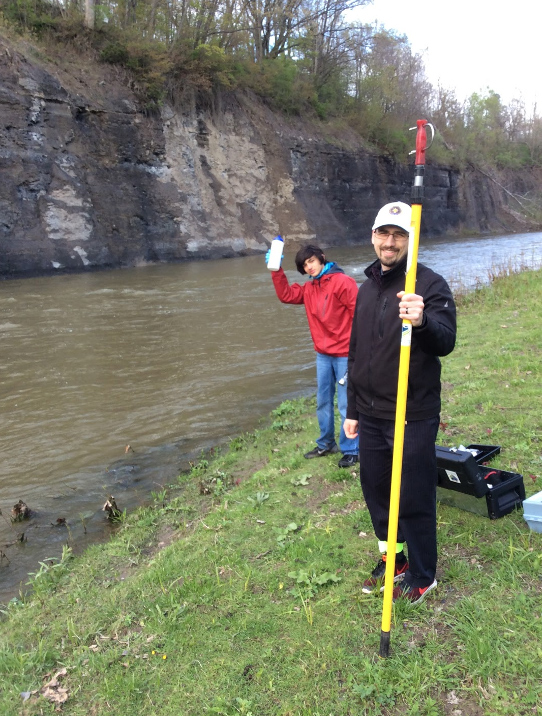
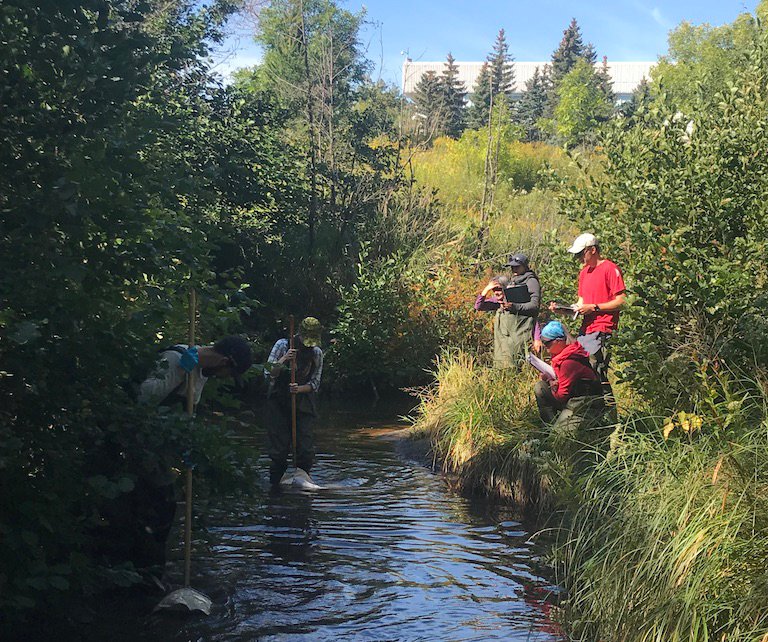
That lab contains the longest continuing dataset on water quality samples in the Great Lakes region, dating back to 1974. Such sampling results are used in a variety of ways, including the emerging science of predicting algal blooms based on agricultural inputs, precipitation, and other factors.
Baker remained a fixture at Great Lakes conferences, especially those focused on western Lake Erie, throughout the two decades after his retirement in 1999. He was known as much for his affable, kind demeanor, and his willingness to help young or other lesser-experienced people as he was his highly cited, peer-reviewed science.
Heidelberg University President Rob Huntington hailed Baker as “an environmental pioneer” in a statement following the scientist’s death. He is mentioned prominently in a 250-page online book about the lab.
“I don't think he ever saw anything at the lab as work,” Laura Johnson, Heidelberg’s current NCWQR director, said. “I think he saw it as who he was.”
In a letter, Jeff Reutter, retired Ohio Sea Grant and Ohio State University Stone Laboratory director, told IAGLR the half-century of field data generated by the Heidelberg lab Baker created is “the most, or one of the most, valuable datasets on nutrient loading in the world” and that it allows the Great Lakes scientific community “to be a leader in understanding the drivers for nutrient loading and harmful algal blooms - issues that have become global problems.”
Founded in 1969 as River Laboratory, the NCWQR was renamed the Water Quality Laboratory in 1974. It got its current name following passage of a U.S. House of Representatives resolution in 2004.
Steve Davis, who has spent more than 40 years in northwest Ohio as a watershed specialist for the U.S. Department of Agriculture’s Natural Resources Conservation Service, said Baker’s findings initially drew skepticism from the ag community. “But Dave persevered because he was at core a scientist and let the scientific process and the data do his talking,” Davis said. “And that process and data eventually won folks over and led us to the greater understanding and knowledge of the natural world we have today. The Heidelberg lab is his legacy to the people of Ohio.”
A former Heidelberg lab director, Ken Krieger, a colleague and friend of Baker’s for 43 years, described him as “truly a remarkable man, both as a scientist-educator and community member.” Krieger notes, “He left a positive impact on everyone who interacted with him, both professionally and personally. His contributions to water quality science and to individual lives will be long lasting.”
Ellen Ewing, who recently retired after more than 40 years as one of the lab’s employees, said he “never stopped trying to learn and understand.”
Read more about Dave in this tribute, written by Ken Baker.