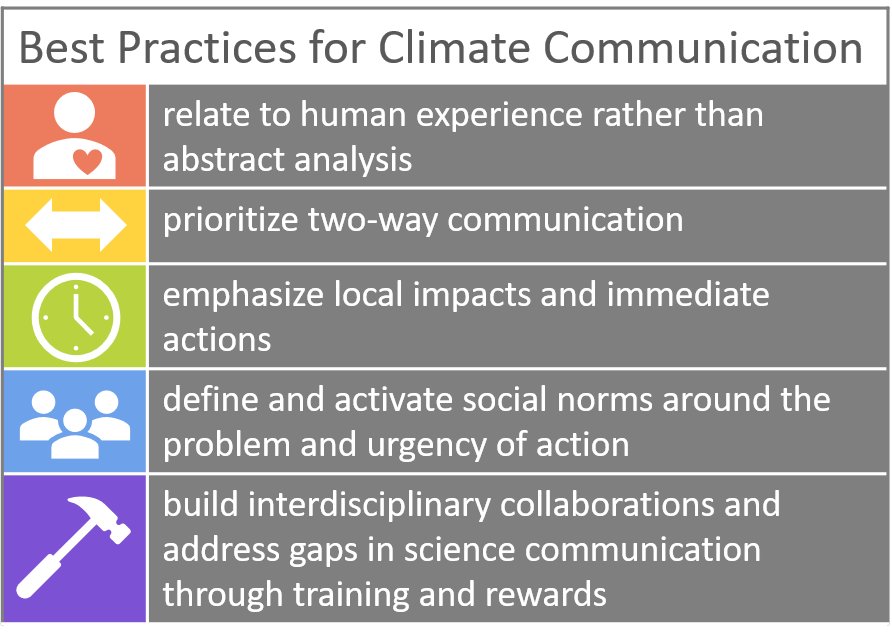
Communicating environmental problems with slow impacts has long been a challenge because the time delay of consequences can dilute the urgency to act. We reviewed the climate change literature for best practices that could also be used in communicating other environmental threats, such as nutrient pollution, that have a disconnect in time between release into the environment and impact. Our study, recently published in Frontiers for Environmental Science, identified five recommended practices. As applied to communication about climate change impacts on the Great Lakes, these recommendations are as follows:
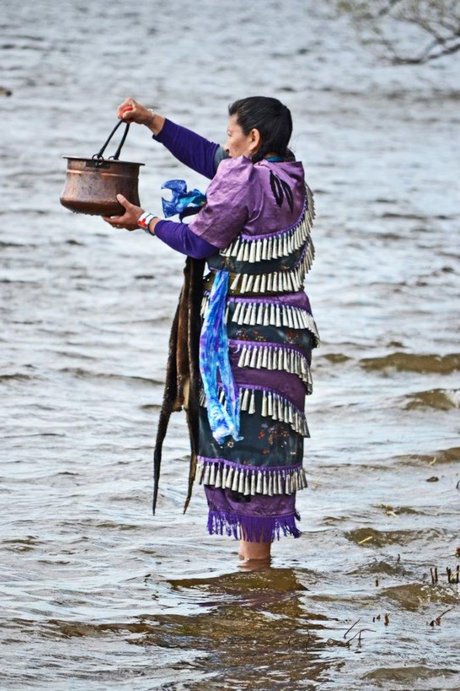
1) Relate scientific findings to human experiences rather than just providing more abstract analyses that may be difficult for people to internalize. For example, the Great Lakes are a cherished source of sustenance, spiritual value, and recreation to many residents. Highlight how these uses and values could be impacted by climate change.
2) Engage in two-way communication early in your work and throughout projects. Potential stakeholders include anyone who can affect or who would be affected by impacts from climate change. They include all levels of government, including Tribes and First Nations, nongovernmental organizations, local community members, business, and other interested parties.
3) Because the global causes and implications of climate change can overwhelm many people, emphasize localized actions for your audience and highlight the urgency of those actions. Communicate the specific potential mitigation and adaptation efforts that individuals or communities can make.
4) Define and activate social norms (community attitudes and behaviors) to mobilize around pride in the Great Lakes’ environment and its role in people's communities. For example, celebrate climate adaptation projects like the development of effective task forces or restoration programs to emphasize the role and value of local action in climate resilience.
5) Build collaborations across scientific disciplines and prioritize scientific communication expertise. Effective science communication requires specific skills and takes time. Many scientists received no formal communication training yet are expected (and want!) to share their work with decision makers and the public. Budget for this in your staffing and funding of Great Lakes climate research.