The water temperature in the middle of Lake Ontario during the winter of 2023–24 was likely the warmest it has ever been, and the resulting changes in the thermal stratification and mixing cycles may give an indication of what is in store as the climate warms. The thermal regime of the Great Lakes is important for many reasons—it determines local weather patterns and influences the quality of drinking water. Temperature is also an abiotic master factor that affects virtually all biochemical, physiological, and life history processes in fishes. Most previous research studies have focused on summer conditions with the winter period (roughly October through April) being greatly undersampled. To address this knowledge gap, Tim Johnson (Ontario Ministry of Natural Resources and Forestry) and I used funding from the Great Lakes Observation System to measure the temperature profiles in Lake Ontario over the last three winters.
Preliminary satellite observations by NOAA suggest that the surface waters in the center of Lake Ontario never cooled below 4°C this last winter. This is important, as water has its maximum density at 4°C, and further cooling, somewhat counter intuitively, results in less dense water. In typical winters, historic records between 1936 and 1986 suggest that the temperatures in the center of the lake were 2°C and rose to 2.5°C between 1993 and 2023. There was variability in these temperatures, and 2012 was possibly nearly as warm as last winter. With a warming climate, the conditions experienced last winter may become the norm rather than the exception. While a 2°C increase in winter temperature may seem small, it likely signals a profound change in circulation dynamics compared to 50 years ago.
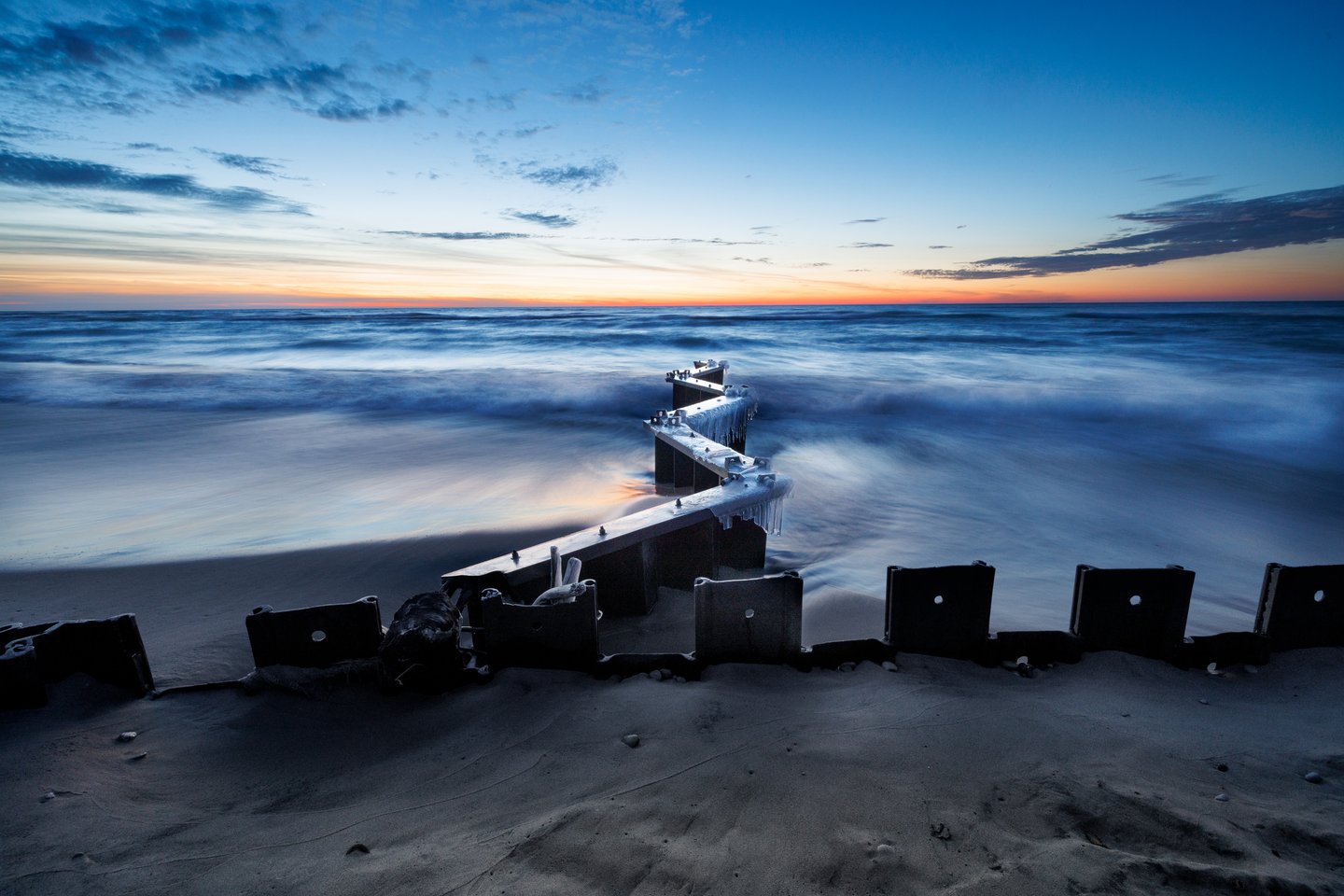
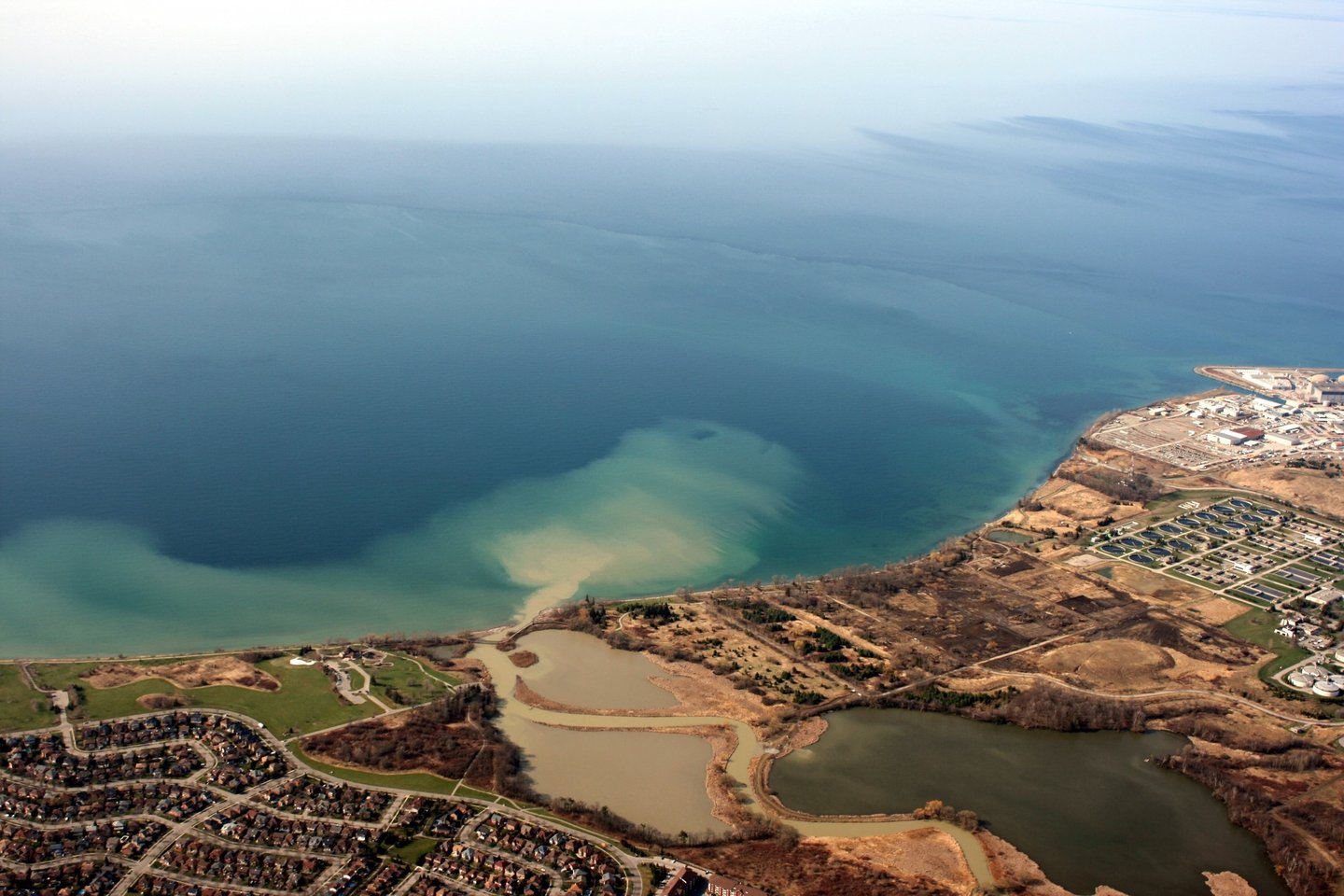
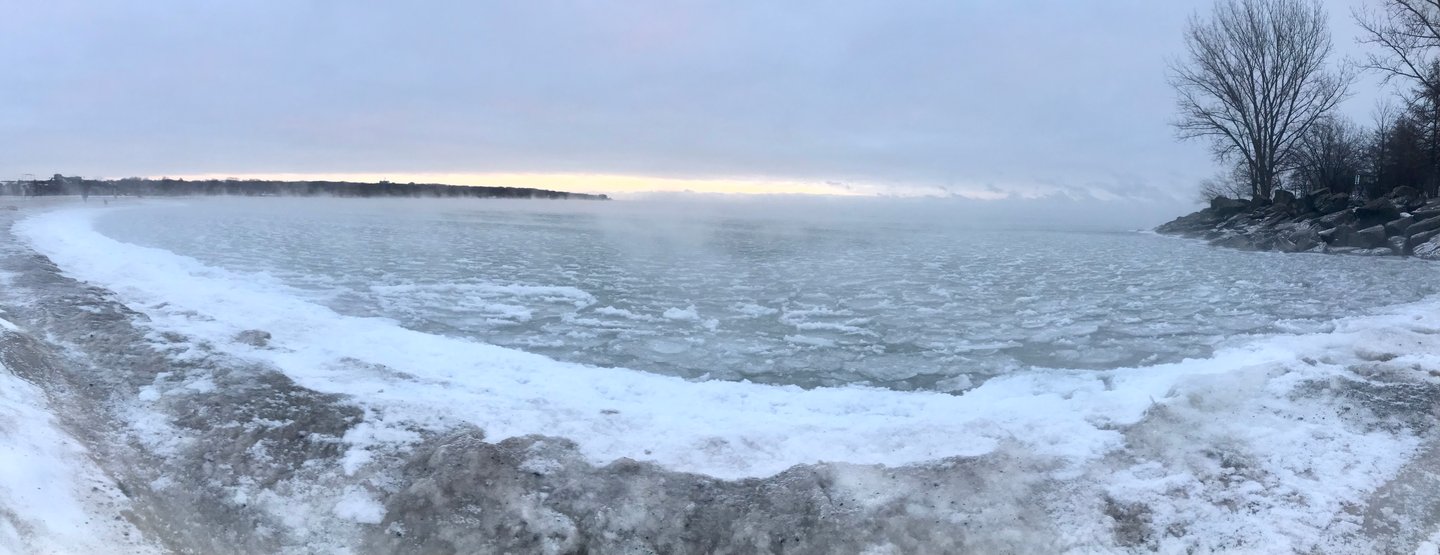
The figure below summarizes the annual cycle of mixing in Lake Ontario during a colder winter and a warmer winter. The main difference between them is the timing and duration of the mixing and stratified periods. In both cases, during late fall when air temperatures are dropping and water temperatures are well above 4°C, convective cooling combined with strong winds can homogenize the water column. This is the well-known fall overturn. Cooling occurs fastest in the shallow edges of the lakes, and these are regions where ice potentially first forms, as shown above.
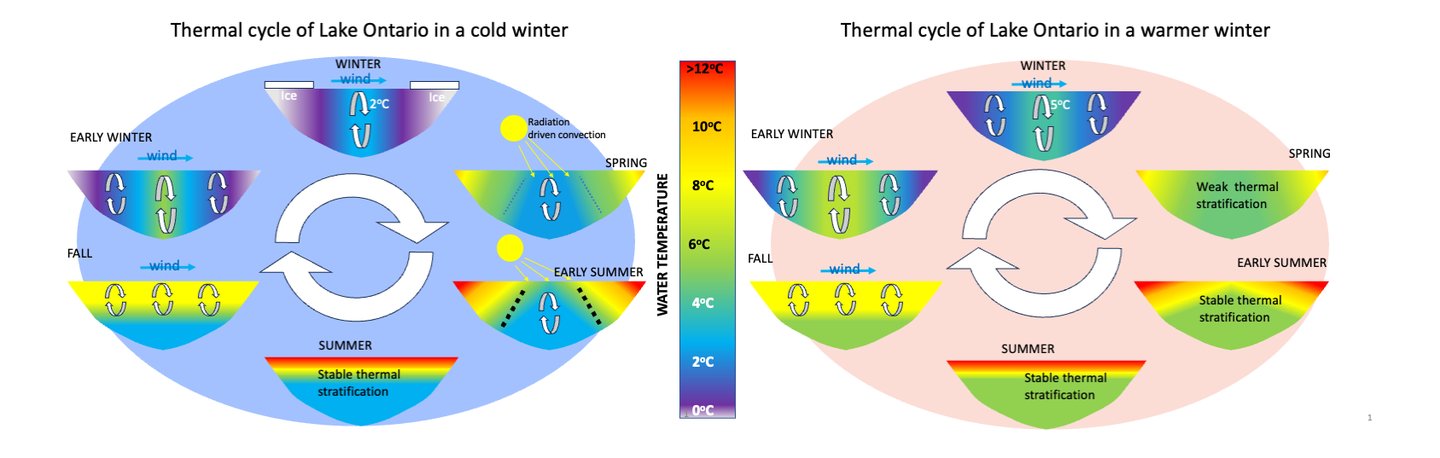
During early winter, when temperatures drop below 4°C, further cooling could lead to a stable inverse stratification whereby colder water is actually lighter. However there is a competition between the tendency for wind to mix the water column and the stabilizing influence of cooling below 4°C. In fall and winter, the mechanical mixing from winds blowing over Lake Ontario usually dominates, resulting in vertical homogenization of the water column, so that we rarely see any substantial, sustained winter inverse stratification.
During late winter and spring, when waters are below 4°C, an important source of mixing is paradoxically from solar heating, as the days become longer. Heating water that is below 4°C actually makes the water denser, so that it sinks and mixes the water column. Surprisingly this so called radiatively driven convection can actually be more effective than wind-driven mixing in homogenizing the water column. In particular, as we move from winter to spring, there is a point where the water column warms past 4°C (the maximum density of water), at which point the whole water column must mix. This spring overturn is very important in redistributing oxygen and nutrients through the water column. After the water column has warmed above 4°C, it can now start to develop thermal layering (stratification), whereby the warmer, lighter waters float above the colder, denser waters. This stratification greatly limits the vertical mixing between the surface and the bottom of the lake. This stable summer thermal stratification typically forms between May and June, but in a warmer winter could occur in April or even earlier.
While the waters of Lake Ontario are usually well-mixed vertically during winter, there are important lateral gradients in temperature across the lake. The shallow regions of the lake that are less than 50 meters in depth cool down more quickly in the fall and warm up fastest in the spring. The deeper regions of the lake that are 100–200 meters deep have a larger thermal mass and a slower response time. In typical cold winters, the center of Lake Ontario can be above 4°C in January while the shallow edges have cooled to near freezing so that ice can form nearshore, and then in April or May the edges of the lake may have warmed above 4°C, while the middle of the lake is still 2–3°C. Similar (but warmer) gradients would likely be set up in fall and winter in a warmer climate.
The warmer climate of the future implies that Lake Ontario may never again cool below 4°C in the deep center, and we expect the duration of the winter mixing period to shorten. The biggest change would be that there is no longer a sustained period of solar-driven radiation homogenizing the water column in spring as the water warms from below 4°C. Rather only the wind could drive vertical mixing, and the winter overturn will be reduced to an extended period of fall overturn driven primarily by mechanical mixing from the strong westerly winds that blow over the 300-kilometer length of Lake Ontario. These changes in the duration and timing of the mixing periods and thermal stratified periods will have profound effects on the food available for fish to eat and when they reproduce, how dissolved oxygen is mixed from the atmosphere to the lake bottom, and where phytoplankton would grow within the water column.