Per- and polyfluoroalkyl substances (PFAS) have become the poster children for the challenges of modern water pollution: persistent, invisible, and costly to track. For the past two years, we’ve been working to solve one of the biggest barriers in PFAS management: the time and cost required to measure them in the field.
From our lab in Traverse City, Michigan, Wave Lumina is developing a portable field screening technology that uses laser light and artificial intelligence (AI) to rapidly detect PFAS at the parts-per-trillion levels, no large lab or lengthy turnaround required. Our goal is to enable environmental engineers, water utilities, and PFAS-impacted site managers to make data-driven decisions on-site, in real time.
A new approach to an old problem
Traditional PFAS analysis requires samples to be shipped off-site to specialized laboratories for liquid chromatography–mass spectrometry (LC-MS/MS) analysis, often taking weeks and costing several hundred (sometimes over a thousand) dollars per sample. Our approach leverages Raman spectroscopy enhanced with nanotechnology, specifically, surface-enhanced Raman scattering (SERS), to detect the unique molecular “fingerprints” of PFAS compounds.
Paired with proprietary sample preparation chemistry and machine-learning algorithms, the technology translates these complex optical signals into clear quantitative results within minutes. Think of it as the field-ready cousin of a laboratory mass spectrometer that is smaller, faster, and deployable at contaminated sites.
Celebrating science and discovery
As a scientist-turned-founder, I believe innovation thrives when we connect fundamental discovery with practical tools that serve society. Wave Lumina’s work is part of that continuum, bridging advanced spectroscopy and AI with hands-on environmental protection. The company was founded on the idea that translating rigorous research into accessible field technology can multiply the reach and impact of science.
That philosophy has been validated through national support: Wave Lumina is backed by the National Science Foundation’s Small Business Innovation Research program and the Activate Fellowship, a nonprofit that empowers scientists and engineers to turn research breakthroughs into scalable solutions. These programs invest in teams who are tackling some of the most pressing challenges of our time, such as environmental contamination, public health, and climate resilience. And they have allowed us to pursue PFAS detection not just as a technical milestone, but as a public mission.
Science isn’t just about data; it’s about empowerment. Every test run by a field engineer, every dataset shared by a researcher, every student learning to apply spectroscopy to water quality, all of it contributes to our collective capacity to safeguard freshwater ecosystems. In a time when environmental challenges can feel overwhelming, stories of scientific progress remind us why this work matters and how it can tangibly improve lives.
"Innovation thrives when we connect fundamental discovery with practical tools that serve society."
Innovation rooted in the Great Lakes
Wave Lumina’s story is inseparable from the Great Lakes community that surrounds it. Our partnership with Northwestern Michigan College and the Freshwater Research and Innovation Center has provided access to chemistry and photonics lab space, enabling us to design and test prototypes just blocks from Lake Michigan’s Grand Traverse Bay. Collaborations with regional engineering firms, environmental consultants, and municipal water utilities allow us to validate our technology on real-world groundwater and PFAS-impacted samples across Michigan.
Growing up in northern Michigan, I’ve seen firsthand how intertwined our livelihoods are with clean water. It’s not just an environmental issue; it’s an economic and cultural one. Developing advanced water-testing technology here is convenient, but it’s also symbolic of the Great Lakes leading the way in freshwater innovation.
From lab bench to field kit
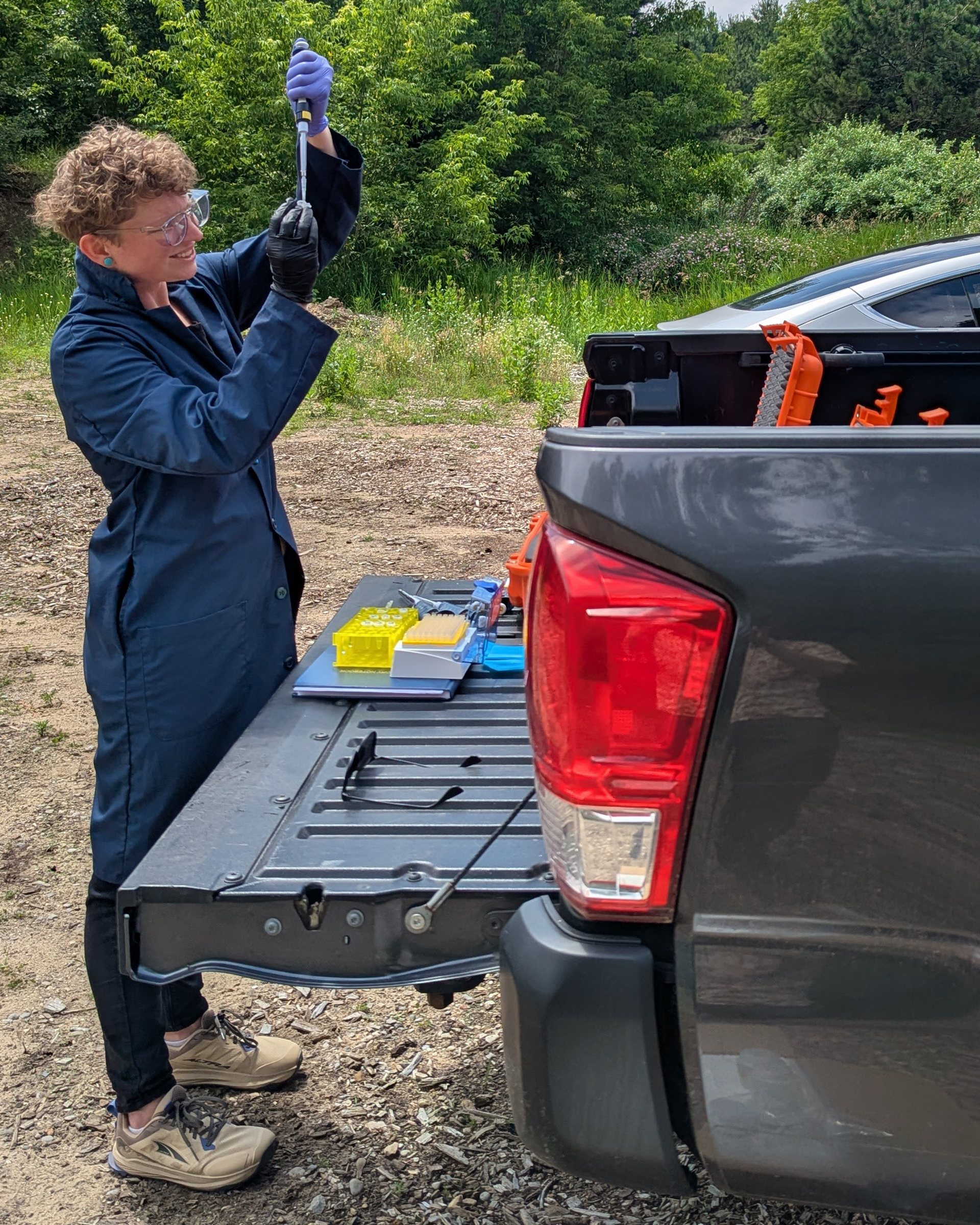
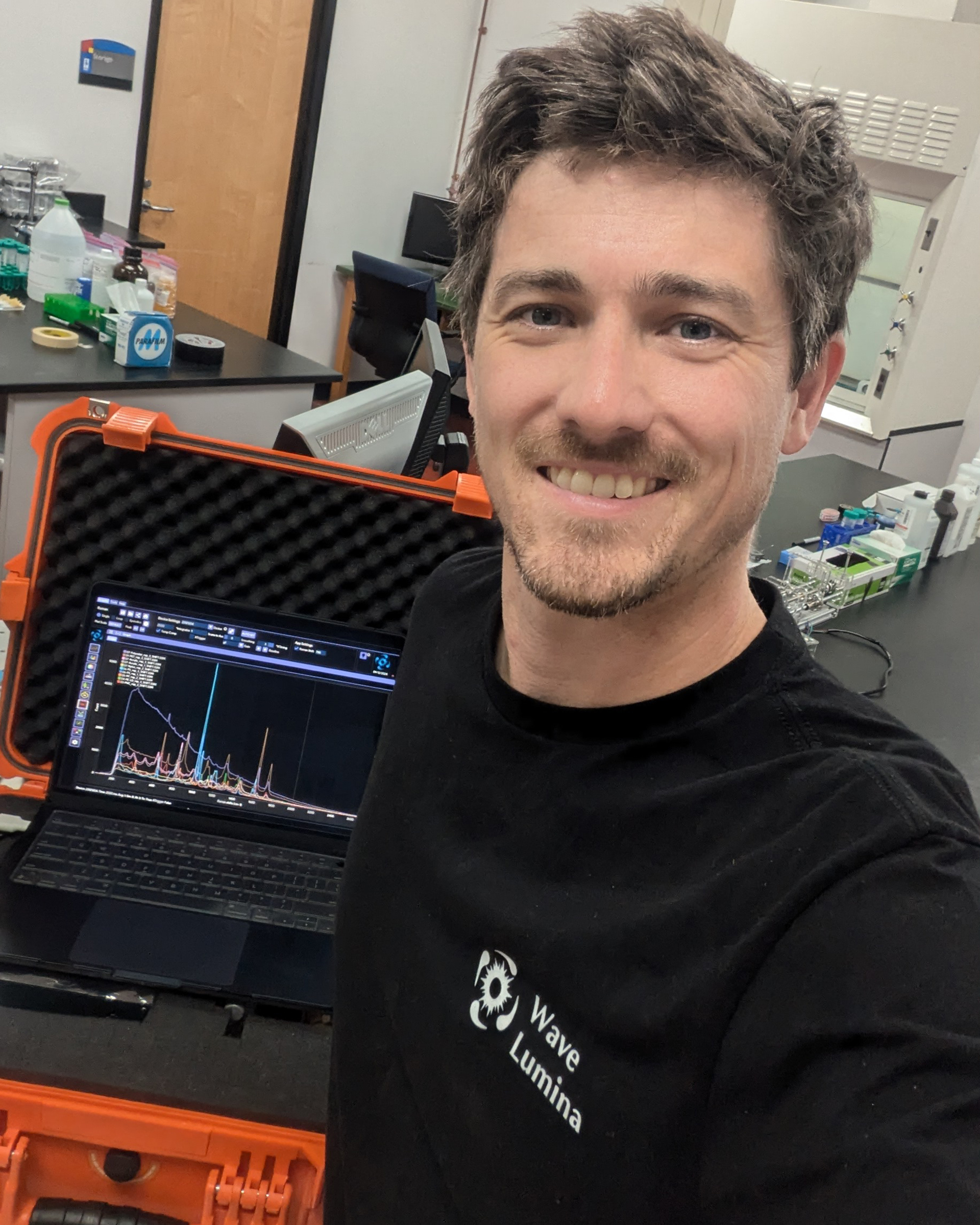
Today, Wave Lumina’s third-generation prototype integrates optical hardware, advanced chemometric analytics, and a compact reagent kit into a system that fits in a single field case. We are testing the device on samples provided by field partners from remediation sites to evaluate its performance alongside standard laboratory results. Early data show promising measurements at trace-level PFAS concentrations, with results produced in under 10 minutes.
We see this as a complementary tool to laboratory methods, not a replacement. By providing immediate screening data, our device helps identify which sites and samples need confirmatory testing, thereby saving both time and money and accelerating cleanup decisions.
The next wave of collaboration
As the environmental challenges facing large lakes grow more complex, so too must our tools. Wave Lumina’s mission is to ensure that the next generation of water scientists and engineers (especially those here in the Great Lakes) have access to technology that keeps pace with the problems they’re solving.
In 2026, we plan to expand our pilot network across the Great Lakes basin and are seeking collaborators interested in integrating rapid PFAS field testing into ongoing monitoring or remediation projects. We believe these early adopters, including scientists, consultants, and utilities, will help shape a new model for environmental testing that’s faster, more accessible, and more responsive to the needs of the field. If you’re interested in collaborating in our pilot network next year, please contact us.