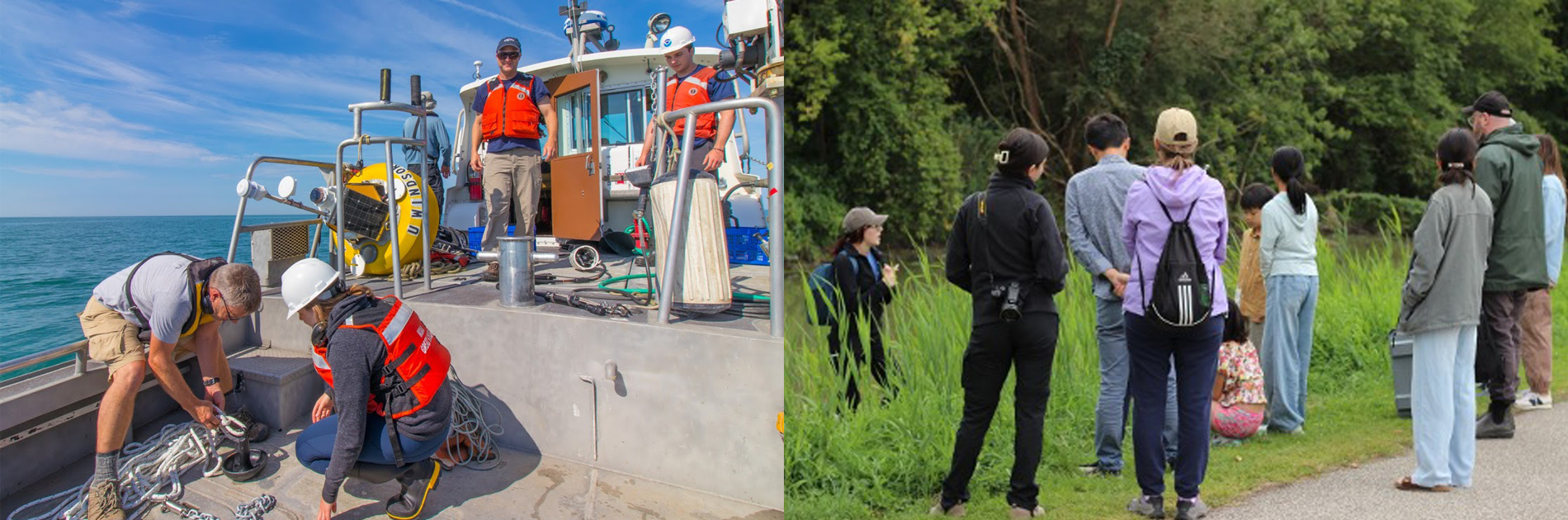
Based at the University of Windsor, the Real-time Aquatic Ecosystem Observation Network (RAEON) supports collaborative freshwater research by providing access to water monitoring instruments and infrastructure. The core of RAEON’s mission centers on collaboration: providing a system through which emerging freshwater monitoring technologies are shared to improve research and management. Its suite of Slocum gliders (autonomous underwater vehicles), real-time buoys, and multiparameter sondes collect continuous, high-resolution data on a wide range of parameters, including temperature, oxygen, chlorophyll, phycocyanin, nitrate, and pH. This information improves understanding of the timing and severity of harmful algae blooms, changing food web dynamics, and the effects of increasing temperatures on lake health. Although these instruments serve as vital tools for tracking lake health, they do not always capture local and nearshore data. This missing information is crucial for connecting the scientific picture to public perceptions of how the lakes and waters are changing. That’s where community science comes in.
"From a glider navigating Lake Erie to a student doing monthly testing at a local creek, every observation adds to our shared understanding of the health of the Great Lakes. "
With support from the Canada Water Agency, RAEON is integrating participatory science into its monitoring network by engaging volunteers, schools, and community organizations. Through this initiative, the network is engaging community members in data collection to expand monitoring while helping people learn about their local waters and shape how they are managed. The program provides opportunities to participate in monitoring baseline parameters like temperature, pH, conductivity, dissolved oxygen, and other water quality indicators in streams, rivers, and shorelines throughout the Western Lake Erie Basin. By sampling at regular intervals, volunteers track seasonal trends and help identify local stressors. The data complement RAEON’s high-tech sensor arrays, creating a more complete picture of watershed health. They also support university researchers modeling the flow of nutrients through the ecosystem and into the Great Lakes.
The program also helps connect volunteers with community science initiatives to build on work by established organizations and strengthen their presence in the Western Lake Erie basin. The team collaborates with Water Rangers, a Canadian nonprofit that provides simple water quality test kits and an open platform for sharing results. Data are also uploaded to DataStream, an open access platform developed by the Gordon Foundation that standardizes and shares water quality data from across Canada (see story, page 20). The program is integrated within the Lake Erie Volunteer Science Network, coordinated by the Cleveland Water Alliance, which links dozens of organizations conducting community-based monitoring across the basin. These partnerships ensure community-based data are accessible and useful not only to researchers, but also to the public, civil society groups, government agencies, and other users.
"Outreach activities are not just about raising the public’s awareness of water quality issues, but also raising scientists’ awareness of the public’s concerns, and providing forums for researchers to listen and learn about what water issues resonate most."
Beyond data collection, RAEON’s participatory science efforts are also focused on public outreach and engagement. This work includes setting up information booths at community festivals and environmental events, making public demonstrations of monitoring tools and platforms, giving public talks, talking with residents about local water issues, and bringing hands-on freshwater science into classrooms. These outreach activities are not just about raising the public’s awareness of water quality issues, but also raising scientists’ awareness of the public’s concerns, and providing forums for researchers to listen and learn about what water issues resonate most.
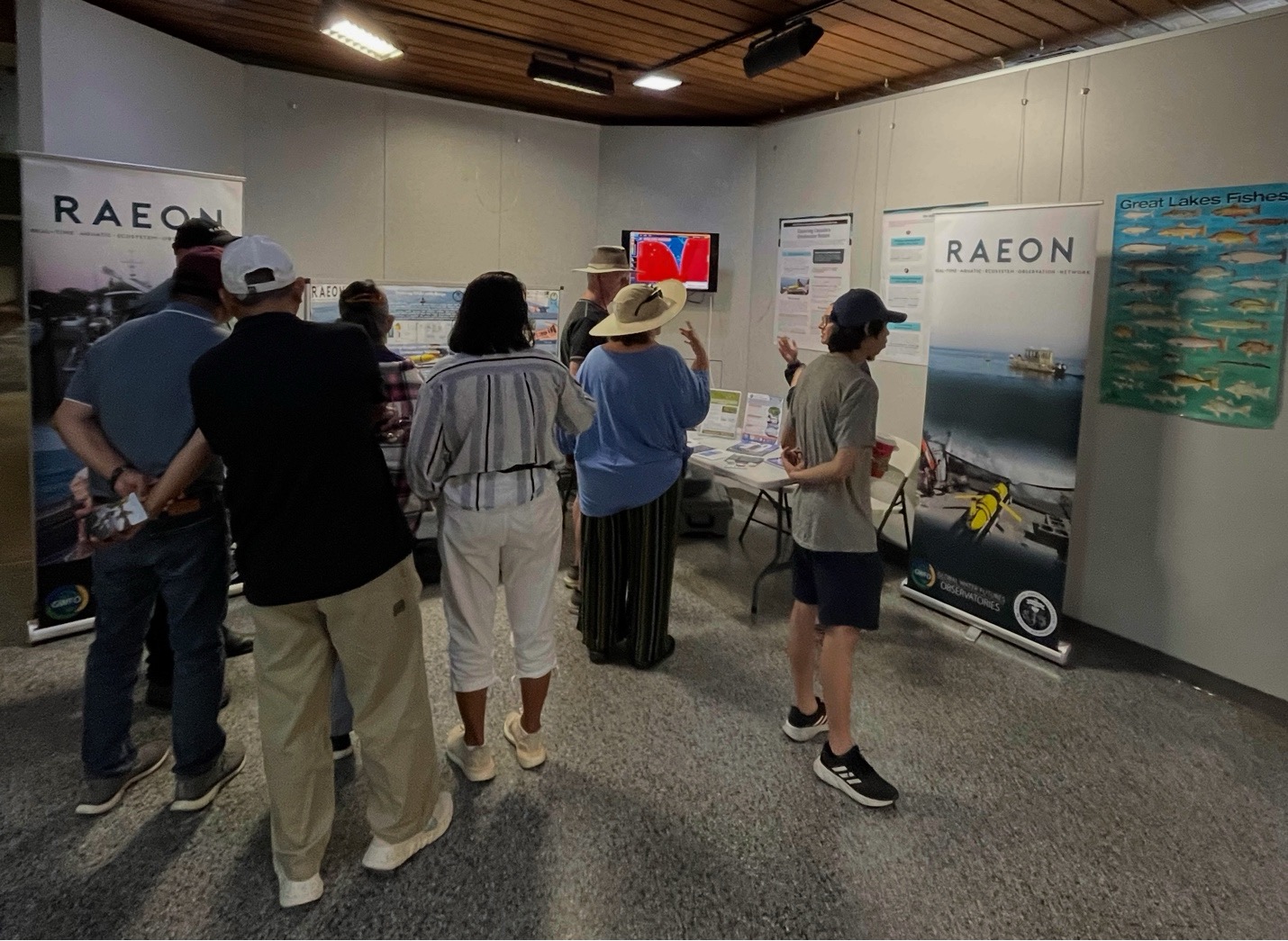
RAEON is also conducting qualitative survey research to explore how community members prioritize different aspects of water monitoring, and how these priorities align or differ from those of scientists engaged in community-based research. The results of this work will help guide the next phase of RAEON’s participatory science program, ensuring that monitoring efforts reflect both scientific and community interests. By aligning these perspectives, the network hopes to strengthen mutual trust and make freshwater science more responsive to the people it serves.
The program aims to expand its reach and scope over the next three years by working with new partners to identify and fill data gaps to better understand the links between offshore, nearshore, and tributary monitoring. From a glider navigating Lake Erie to a student doing monthly testing at a local creek, every observation adds to our shared understanding of the health of the Great Lakes. High-resolution glider and buoy data reveal the dynamics of algal blooms offshore; community-based data provide context at the land-water interface, and open platforms like those created by DataStream and Water Rangers make those datasets visible and interoperable. Researchers gain new data and local insights, communities gain tools and confidence to understand their environment, and the lakes themselves gain a growing network of people invested in monitoring and stewardship.
Established in 2018 and led by Science Director Aaron Fisk and Research and Operations Director Katelynn Johnson, the RAEON network links universities, municipalities, and government institutions to share equipment, expertise, data, and logistical capacity to accelerate Great Lakes research. In 2023, RAEON joined Global Water Futures Observatories (GWFO), a national network led by the University of Saskatchewan that operates 64 instrumented research sites across Canada. RAEON serves as GWFO’s Great Lakes node, providing real-time monitoring and open access environmental data of changing ecosystems within a national network. The team works collaboratively with partners, such as the Great Lakes Observing System, to ensure that high-resolution buoy and glider data are publicly accessible and supports binational research, forecasting, and management efforts across the Great Lakes.